
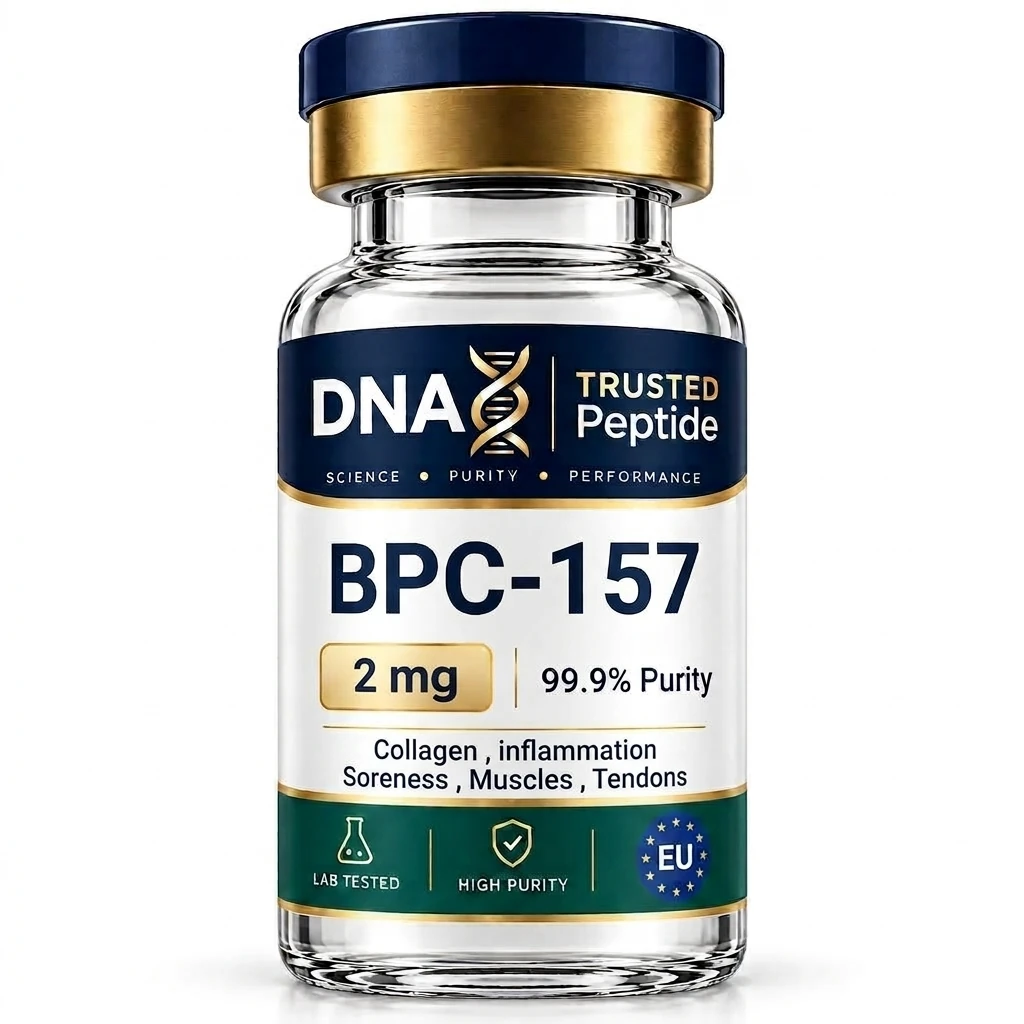
BPC-157 (short for “Body Protection Compound-157”) is a synthetic peptide made of 15 amino acids. Its sequence, Gly-Glu-Pro-Pro-Pro-Gly-Lys-Pro-Ala-Asp-Asp-Ala-Gly-Leu-Val, is a fragment of a larger protein first isolated from human gastric juice. Laboratories normally receive it as a freeze-dried (lyophilised) white powder.
Why researchers are interested in it
Almost all published work on BPC-157 comes from cell cultures and animal models, mainly rodents. In those models it has been examined for its effect on:
- tendon, ligament and muscle repair after injury;
- the lining of the stomach and intestines;
- the growth of new blood vessels (angiogenesis), including signalling through VEGFR2;
- the nitric oxide pathway and local inflammation markers.
It is also described as unusually stable in gastric juice, which is one reason it keeps appearing in gut-related research.
What the evidence does not show
It helps to stay realistic. Most studies come from a small number of research groups, the findings are largely preclinical, and there is very little controlled human data. BPC-157 is not an approved medicine, and it appears on the WADA Prohibited List as a non-approved substance. Nothing in this article describes a medical use.
Handling a lyophilised research peptide
As general laboratory practice, lyophilised peptides are kept sealed, cold and away from light. Research solutions are commonly prepared with sterile or bacteriostatic water and stored refrigerated for a limited time. Always follow your own laboratory protocol and the supplier’s storage sheet.
What to check before you order
Quality varies widely between suppliers. Ask for a batch-specific certificate of analysis that shows HPLC purity and mass-spectrometry identity. Our guide How to Read a Peptide COA explains each line. You can view our current BPC-157 listing, or read how it differs from TB-500 in BPC-157 vs TB-500.
For laboratory research use only. Not for human or veterinary consumption. This article is educational and is not medical advice.