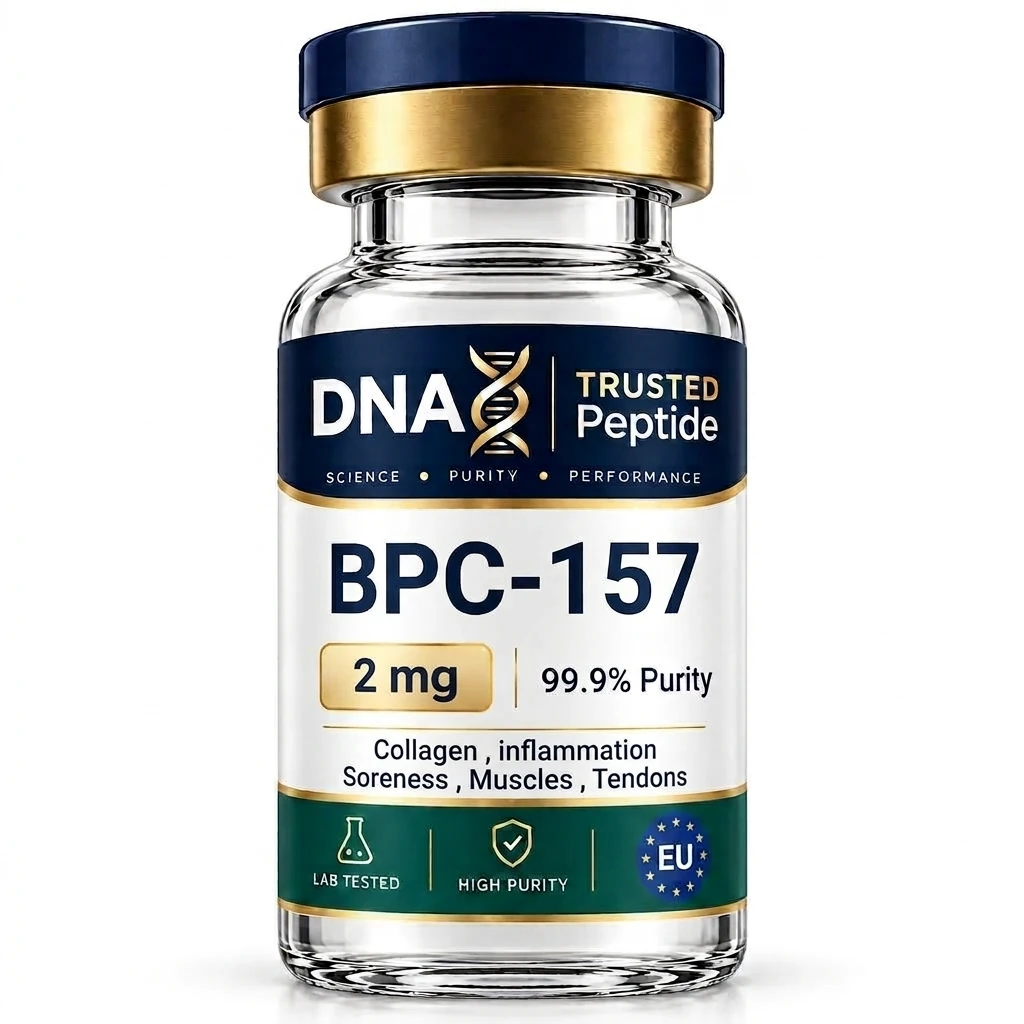

BPC-157
A gastric-derived pentadecapeptide that stimulates VEGF to promote new blood-vessel formation, accelerating the healing of torn tendons, ligaments and muscle fibres while repairing an inflamed, ulcerated gut lining.
BPC-157, scientifically known as Body Protection Compound-157, is a synthetic 15-amino-acid peptide (pentadecapeptide) derived from a natural protein found in human gastric juice. It is exceptionally stable in harsh acidic and enzymatic environments without needing a chemical carrier, giving it unusual bioavailability both orally and by injection. BPC-157 works by stimulating vascular tissue-regeneration pathways — modulating expression of the vascular endothelial growth factor receptor (VEGFR2) and activating the FAK-paxillin pathway, which speeds the migration of fibroblasts and tendon cells — while also regulating nitric oxide (NO) release, promoting microvessel growth and modulating inflammation in tendons, ligaments, muscles and ulcerated gut lining.
The innate healing elixir for tendons, ligaments and the gut lining
If there is one global icon in regenerative medicine and the recovery of stubborn injuries, it is BPC-157 — it tops the list of the most-researched peptides for its ability to accelerate connective-tissue healing and address leaky gut.
Classification: Tissue-repair, tendon & joint healing and gut-protective peptides (Tissue Repair / Angiogenic / Gut Healing Peptides).
Structurally, it is a chain of 15 amino acids representing the active sequence isolated from the human gastric protective protein. This gives it natural resistance to digestion by stomach acid and makes it effective whether applied topically, injected or taken orally.
Picture a torn cruciate ligament, an inflamed tendon or an eroded gut lining as a disaster zone cut off from its supplies: connective tissue naturally has a poor blood supply and can take many months to heal fully.
How it works
BPC-157 directs endothelial cells to rebuild a network of new micro-capillaries through angiogenesis, while stimulating growth-hormone (GH) receptors on tendon fibroblasts to accelerate production of type I and type III collagen fibres. In parallel, it enhances the nitric-oxide pathways that regulate blood flow and calm inflammation, and restores the tight junctions of the small-intestinal lining — stopping toxin leakage and addressing ulcerative inflammation at its root.
In research settings it is widely studied in Achilles-tendon tears, shoulder-tendon injuries, gastric ulcers, inflammatory bowel disease (IBD) and damage caused by chronic use of painkillers and non-steroidal anti-inflammatory drugs (NSAIDs).
Recovering from injury is not just passive waiting — it means sending biological signals that build blood-supply bridges into isolated tissue.
The exceptional accelerator for tendon repair and gut-lining healing. BPC-157 is the gold standard in tissue-regeneration and chronic-injury research, belonging to the class of constructive peptides that speed healing and support gut health. Isolated by scientists from protective proteins that occur naturally in the stomach, it has a unique ability to survive and act in the body's varied environments without breaking down. Its mechanism builds new microvascular networks that deliver blood and oxygen directly into tendons, ligaments and joints — tissues known for slow recovery — while stimulating collagen cells to rebuild torn tissue with outstanding efficiency and strength. It also acts as a protective shield that re-seals the pores of an ulcerated gut lining and counters acute digestive inflammation. Researchers study it as one of the most powerful biological compounds for athlete rehabilitation and rapid repair of cellular damage — because real recovery begins by directing blood flow to where the body cannot reach on its own.