
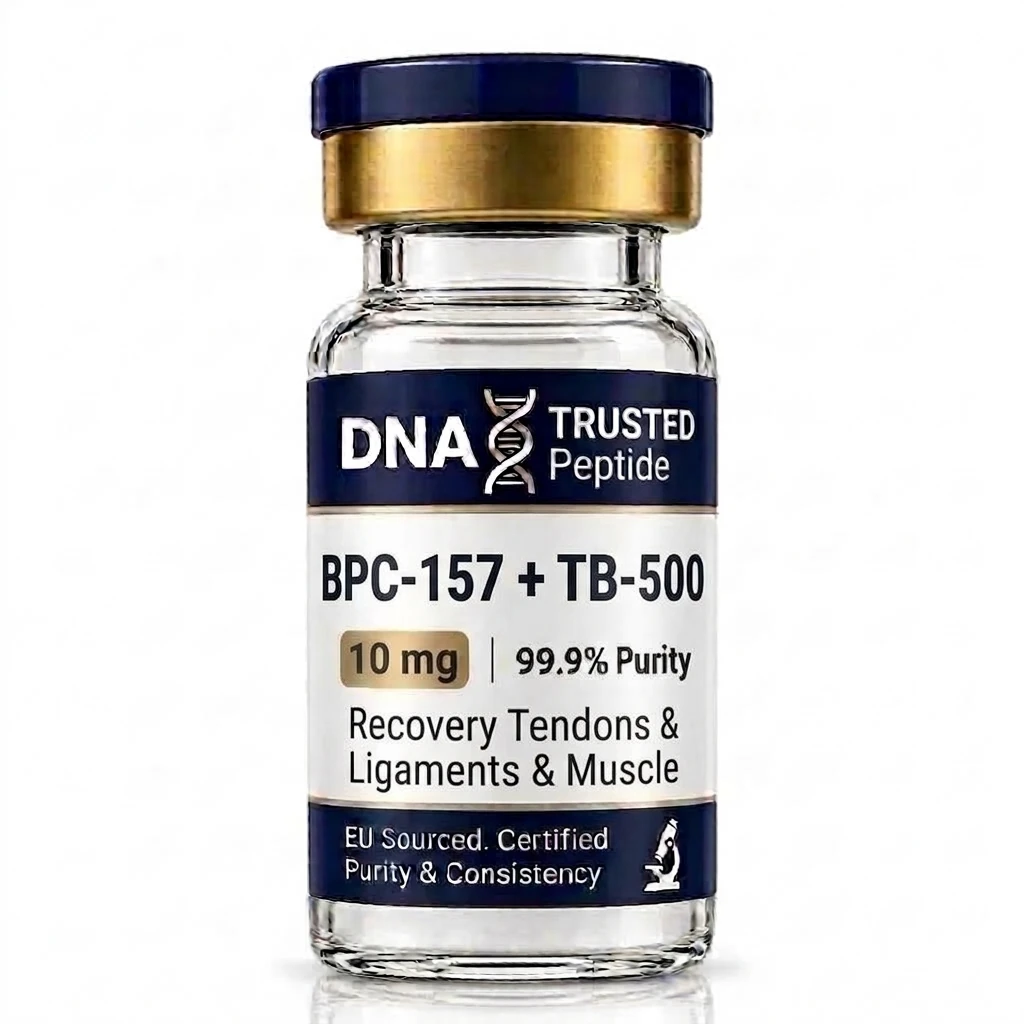
BPC-157 and TB-500 are often mentioned together, but they are different molecules with different origins and different proposed mechanisms. Here is a neutral comparison for researchers.
At a glance
- Origin: BPC-157 is a 15-amino-acid fragment of a protein found in gastric juice. TB-500 is a synthetic peptide related to thymosin beta-4, a longer protein present in almost all human cells.
- Proposed mechanism: BPC-157 research focuses on blood-vessel growth and the nitric oxide pathway. TB-500 and thymosin beta-4 research focuses on actin regulation, which influences how cells migrate toward a damaged area.
- Typical research models: both are studied mainly in cell cultures and animals (tendon, muscle, gut and skin-wound models). Controlled human data is limited for both.
- Regulatory status: neither is an approved medicine, and both appear on the WADA Prohibited List.
Why they are often studied side by side
Because they are thought to act on different parts of the tissue-repair process, some laboratories study the two together. For that reason a pre-mixed BPC-157 + TB-500 blend is also available, so one vial covers both compounds.
How to read the comparison
There are no head-to-head human trials, so the table above should not be read as evidence that one peptide is better than the other. Which one fits depends entirely on the question your study is asking.
Where to start
Read the individual guides first: What Is BPC-157? Then look at the single listings for BPC-157 and TB-500. Whichever you choose, check the certificate of analysis first (see How to Read a Peptide COA).
For laboratory research use only. Not for human or veterinary consumption. This article is educational and is not medical advice.