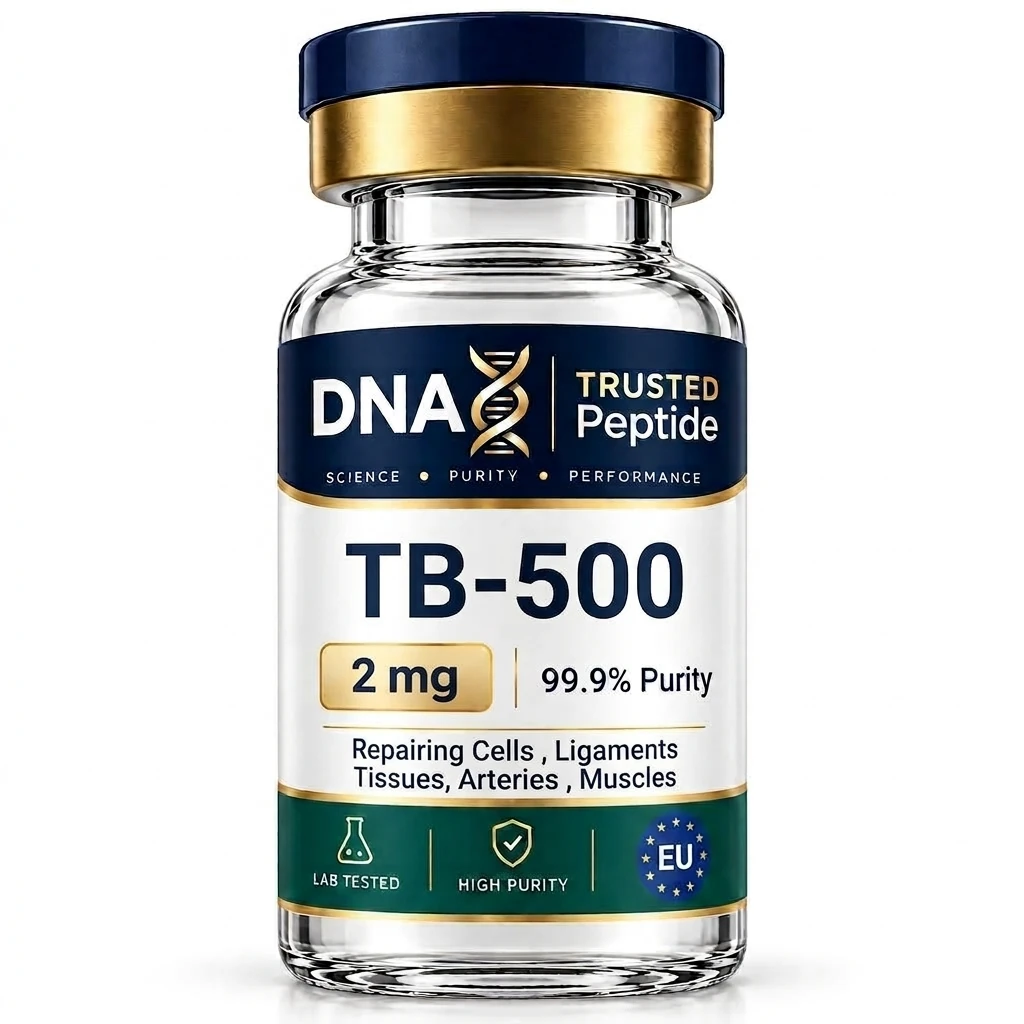

TB-500 / Thymosin Beta-4
A synthetic fragment of Thymosin Beta-4, studied for its role in cell migration and tissue-repair pathways.
TB-500 (Thymosin Beta-4 / Tβ4) is a synthetic peptide and structural analogue that mimics the active functional fragment of the natural endogenous protein Thymosin Beta-4, which consists of 43 amino acids with the sequence Ac-Ser-Asp-Lys-Pro-Asp-Met-Ala-Glu-Ile-Glu-Lys-Phe-Asp-Lys-Ser-Lys-Leu-Lys-Lys-Thr-Glu-Thr-Gln-Glu-Lys-Asn-Pro-Leu-Pro-Ser-Lys-Glu-Thr-Ile-Glu-Gln-Glu-Lys-Gln-Ala-Gly-Glu-Ser-OH. In peptide-synthesis research, TB-500 focuses chemically on the core actin-binding domain (amino acids 17–23: LKKTETQ). Thymosin Beta-4 is classed as a major G-actin sequestering protein in the cytoplasm of eukaryotic cells. It prevents globular actin from polymerising into filamentous actin (F-actin) until tissue-regeneration signals are received, maintaining a vital pool of actin monomers needed for cytoskeleton remodelling. This gives the cell great structural flexibility and speeds the migration of endothelial cells, fibroblasts and stem cells directly to damaged tissue. Alongside cytoskeletal remodelling, TB-500 activates angiogenesis by increasing expression of vascular endothelial growth factor (VEGF), lowers pro-inflammatory cytokines such as TNF-α and IL-6, and suppresses TGF-β signalling responsible for fibrosis and distorted muscle and tendon scarring — leading to complete repair of tendons, ligaments, muscle and cardiac tissue without leaving stiff fibrosis that restricts movement.
The most powerful molecular driver of actin regulation, tendon & ligament repair, angiogenesis and anti-scarring
If you are looking to accelerate the healing of stubborn muscle and tendon injuries, repair ligament tears, build new blood supply in injured areas and break down fibrosis and scar tissue that limit joint and tissue flexibility — by activating the cytoskeleton's innate rebuilding language — TB-500 (Thymosin Beta-4) is the absolute gold standard in sports and regenerative medicine for connective tissue.
Classification: Tissue-repair and regenerative peptides, cytoskeletal actin regulators, angiogenic and anti-fibrotic therapeutics (Tissue Repair & Regenerative Peptides / Actin-Sequestering Proteins / Angiogenic & Anti-Fibrotic Therapeutics).
Structurally, it is a pure peptide mimicking the natural functional sequence of Thymosin Beta-4, with a low molecular weight and high tissue permeability that allow systemic distribution through the blood and precise delivery to poorly perfused target tissues such as tendons and cartilage.
Picture a muscle or tendon injury as a partly collapsed building, full of rubble with its access roads blocked. Conventional treatments merely put painkillers on the outer walls, whereas TB-500 acts like a site engineer: it clears the rubble, supplies the basic building materials (actin proteins) and opens new roads and supply lines (angiogenesis) so repair cells reach the heart of the damage and rebuild it with flexibility and strength.
How it works
TB-500 distributes systemically and binds actin monomers inside cells at injury sites. This triggers immediate migration of fibroblasts and stem cells to the torn tissue, realigning and rebuilding collagen fibres with parallel, engineered precision. At the same time, the peptide releases endothelial-sprouting signals that generate new capillaries, flooding the injured area with oxygen and nutrients to speed recovery and break the poor circulation typical of tendons and ligaments. It also plays an exceptional role in suppressing fibrotic pathways and silencing the inflammatory cytokines that cause swelling and pain, preventing the formation of hard scar tissue and preserving the elasticity of muscle and tendon — in addition to its documented ability to protect heart-muscle cells and speed the healing of corneal and skin ulcers.
In clinical, research and elite sports-medicine settings, Thymosin Beta-4 and its peptide analogues have been studied extensively for rotator-cuff tears, Achilles tendon injuries, cruciate-ligament sprains and cardiac rehabilitation after acute infarction, and it is regarded as one of the most important biological discoveries in the repair of musculoskeletal injuries, with a strong safety and biocompatibility profile.
Recovering from chronic injuries and regaining strength no longer requires long waits or living with stiff joints — it rests on giving cells their innate code for movement and rebuilding, repairing tissues and tendons from their deepest roots.
The most powerful biological driver for tendon and ligament repair, muscle-fibre regeneration and the prevention of tissue scarring. TB-500, the Thymosin Beta-4 mimetic, is a leading breakthrough in regenerative sports-medicine research, designed to rebuild connective tissue after severe injury. It belongs to the class of cellular-repair peptides and actin regulators that stimulate blood-vessel growth, treat tears and protect joints and muscles from fibrosis. Its high-purity molecular structure works by liberating cytoskeletal proteins, acting as a physiological signal that drives stem cells and fibroblasts to flow into tear sites and realign their fibres with great flexibility. Its unique mechanism opens new blood-supply routes, silences chronic inflammation and prevents the hard scars that restrict joint movement, delivering remarkably fast recovery for exhausted tendons, ligaments and muscles. Leading orthopaedic and regenerative-medicine specialists study it as one of the strongest biological compounds for repairing musculoskeletal damage — because real strength and recovery begin by giving your cells the original building code that re-weaves your tendons and muscles from the source.