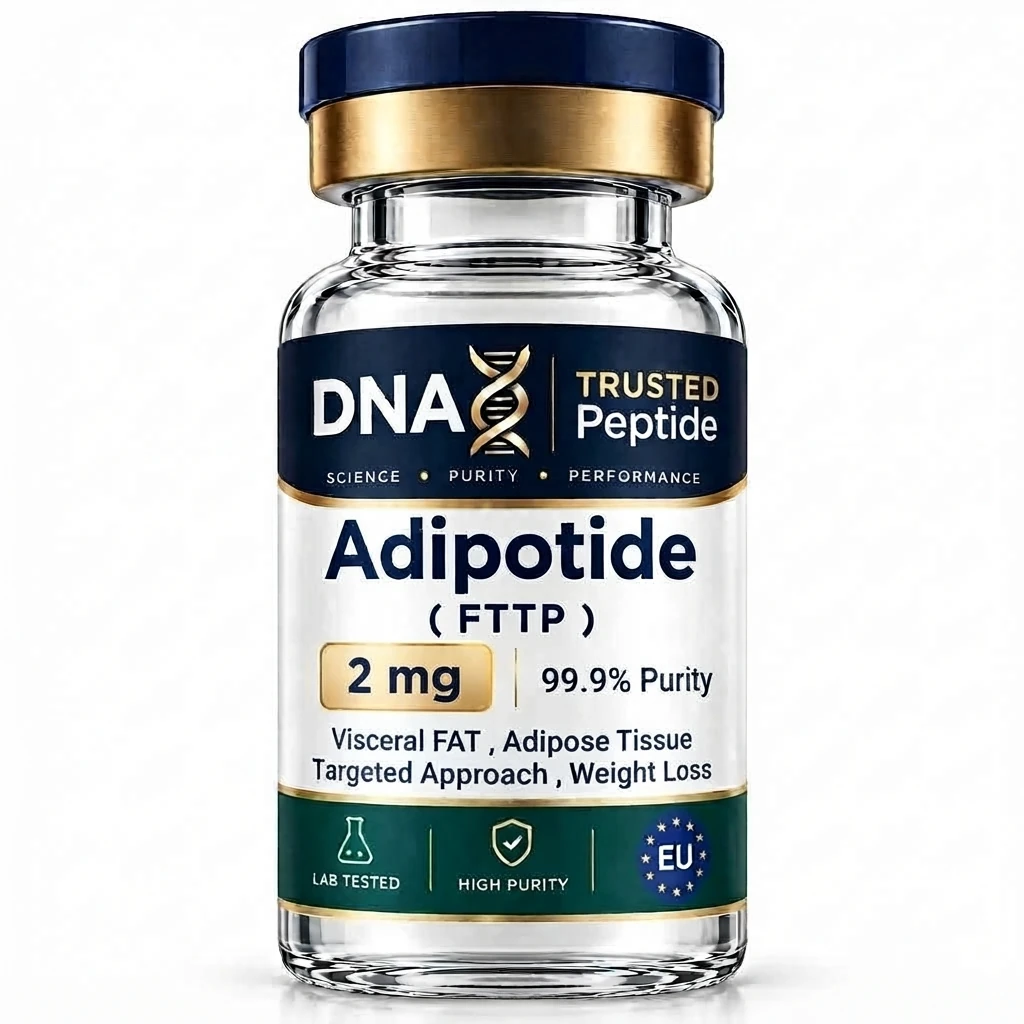

Adipotide (FTTP)
A targeted, apoptosis-inducing peptide that binds selectively to the blood vessels of white adipose tissue, cutting off their blood supply to trigger fat-cell death and rapid fat reduction.
Adipotide, known experimentally as FTPP, is a synthetic targeting peptide designed to attack the blood vessels that nourish white adipose tissue. Its structure has two main parts: a homing peptide sequence that binds specifically to prohibitin receptors on the surface of the endothelial cells lining blood vessels in fat, and a pro-apoptotic peptide segment that disrupts the mitochondrial membranes of those cells. This targeting cuts off the blood supply to fat cells and deprives them of vital resources, leading to their shrinkage and self-destruction, and improved insulin sensitivity in pre-clinical studies.
The peptide that cuts the supply lines to fat cells directly
While most weight-loss solutions focus on reducing appetite or speeding general metabolism, Adipotide takes a fundamentally different route: targeting the network of blood vessels that feeds accumulated fat.
Classification: Adipose-targeting peptides, anti-obesity agents and inhibitors of vascular supply (Targeted Proapoptotic Peptides / Anti-Obesity).
Structurally, it is a peptide designed with dual-targeting technology: it carries a homing key that precisely recognises the lining of blood vessels specific to adipose tissue and no others, linked to a biological chain that releases a cell-dismantling signal.
Picture fat cells as a city that depends entirely on dedicated supply pipes to survive and grow. If those pipes are closed, the fat mass cannot hold out.
How it works
Adipotide binds the prohibitin receptor on endothelial cells of blood vessels in white adipose tissue, then penetrates them to create destructive permeability in the mitochondrial membrane, causing programmed death of these vessels. As blood and oxygen flow is cut off, the deprived fat cells begin to shrink and regress on their own, and the body reabsorbs and clears them. In research this has been accompanied by a sharp reduction in fat mass and a notable improvement in markers of insulin resistance.
In animal and research studies, it has attracted major interest for how quickly it reduces accumulated white fat, while remaining under intensive scientific follow-up to assess the safety of kidney function and cellular balance.
Getting rid of stubborn fat is not always about burning calories — sometimes it lies in removing the foundations of its biological survival.
Closing the supply lines to stubborn fat. Adipotide represents a unique scientific approach that does not rely on appetite suppression but targets the arteries of fat tissue directly. It belongs to the class of targeted peptides for reducing white fat and improving metabolism. Its structure is based on a smart code that recognises the blood vessels feeding fat, not those of other organs: it binds prohibitin on the walls of those vessels to trigger their programmed death and cut off their blood supply. This blockade starves fat cells and makes them shrink rapidly so the body clears them by itself, while regulating the cells' response to insulin. Scientists study it as an exceptional experimental model for removing fat by cutting off its vital supplies at the roots — because eliminating stubborn tissue begins by stopping what keeps it alive.