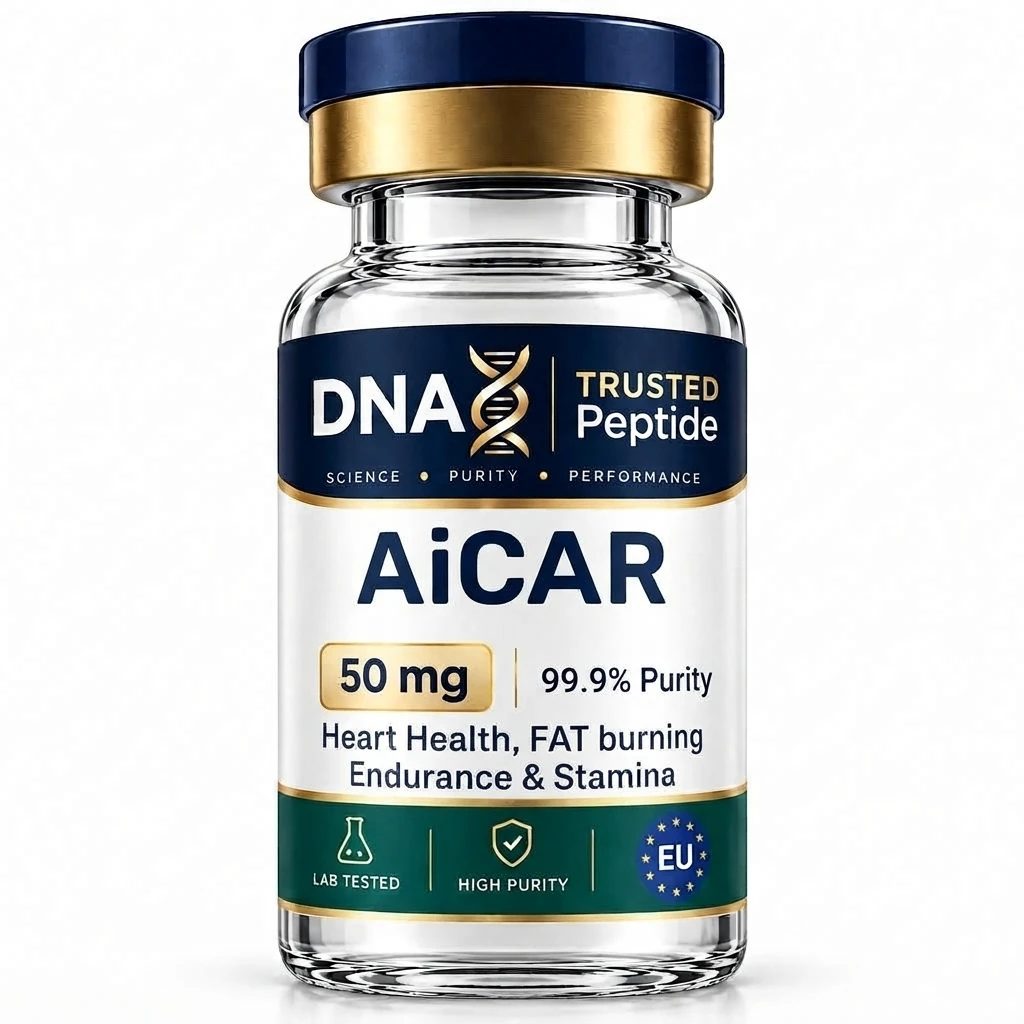

AICAR
An AMPK-pathway activator that mimics the metabolic effects of exercise, increasing fatty-acid oxidation, mitochondrial biogenesis and endurance capacity.
AICAR, chemically 5-aminoimidazole-4-carboxamide ribonucleotide, is a nucleoside molecule and direct activator of the cell's main energy sensor, the AMP-activated protein kinase (AMPK). AICAR structurally mimics adenosine monophosphate (AMP), so it binds the regulatory site of AMPK and stimulates its phosphorylation and activation without depleting the cell's actual ATP energy stores. This activation mimics the biological effects of hard exercise: it increases glucose uptake through GLUT4 channels, speeds fatty-acid oxidation and stimulates mitochondrial biogenesis via the PGC-1α pathway, while inhibiting fat and cholesterol synthesis pathways.
The cellular exercise mimetic and key to outstanding endurance energy
If you are looking for a compound that drives your cells to burn energy and raise oxidation efficiency as if you were going through hard training, AICAR is the most talked-about molecule in research on physical performance and muscular endurance.
Classification: Metabolic energy-sensor activators and exercise mimetics (AMPK Activators / Metabolic Endurance Mimetics).
Structurally, it is a synthetic nucleoside analogue that resembles natural energy molecules, allowing it to cross the cell membrane and bind directly to the switches that control energy use, without the need to break down actual energy molecules.
Picture a muscle during a long-distance run: its fast energy runs out and an internal alarm called AMPK goes off, forcing the cell to immediately open its sugar gates and burn fat stores to generate an alternative, continuous stream of energy.
How it works
AICAR enters the cells and is converted into an analogue that mimics AMP, binding and fully activating AMPK even at complete rest. This activation sends immediate signals to move glucose transporters to the surface of the muscle cell so it can take up sugar independently of insulin, while activating PGC-1α, which instructs the cell to build new mitochondria and burn more fatty acids. The result is a large increase in resistance to fatigue, more efficient oxygen use and better fat and sugar metabolism.
In research, it is studied in models of metabolic syndrome, protection of the heart muscle from ischaemia, and enhancement of aerobic fitness and prolonged muscular endurance.
Physical endurance does not depend only on muscle strength — it begins with the mitochondria's ability to generate energy efficiently inside every muscle fibre.
Mimicking the effect of exercise inside the cell's energy furnaces. AICAR is the pioneering research molecule for activating the body's energy engines without mechanical effort. It belongs to the class of AMPK activators and aerobic-performance mimetics. Its nucleoside structure resembles natural energy-use signals, binding directly to the emergency switch inside the cell and convincing it that hard physical training is taking place. This mechanism forces muscle tissue to draw glucose from the bloodstream and burn accumulated fat for energy, while stimulating mitochondrial multiplication to raise endurance capacity and fight muscular fatigue. Scientists study it as an exceptional model for treating metabolic disorders and understanding the limits of human energy and capacity under the toughest conditions — because sustained vitality begins by awakening the dormant energy sensors within your tissues.