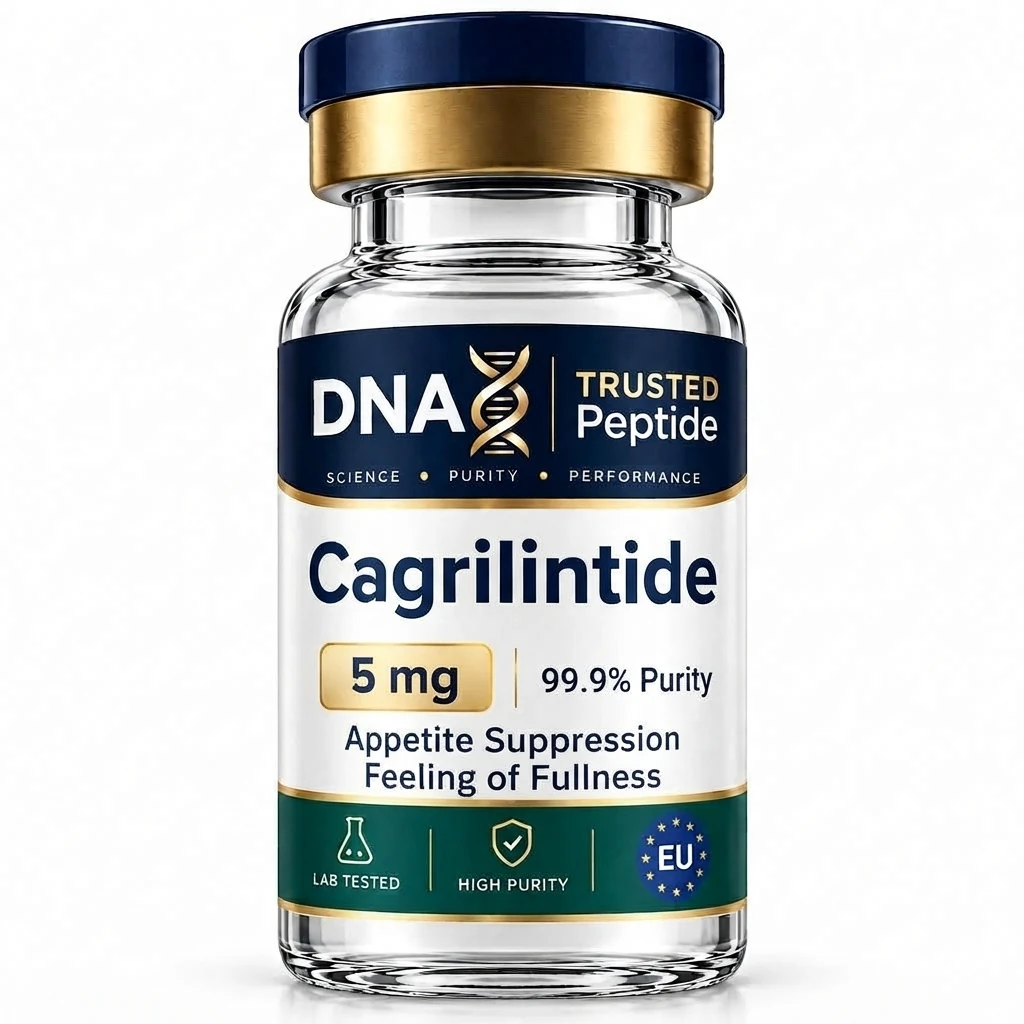

Cagrilintide
A long-acting synthetic amylin analogue that delays nutrient absorption and enhances gastric fullness; used with semaglutide to target hunger through two independent biological pathways.
Cagrilintide is a long-acting synthetic peptide analogue of amylin, the hormone released by pancreatic beta cells alongside insulin. Its molecular structure was modified by substituting specific amino acids and attaching a fatty diacid chain to increase binding to serum albumin and extend its biological half-life for weekly dosing. Cagrilintide is a dual agonist of calcitonin receptors and receptor-activity-modifying proteins (RAMPs), forming active amylin receptors (AMYR1–3) in the neural control area of the hindbrain (area postrema and NTS). This slows gastric emptying, enhances prolonged physiological satiety and suppresses appetite and food-reward signals in the central nervous system through a mechanism completely independent of, and complementary to, the GLP-1 pathway.
The weekly amylin mimetic for resetting satiety and controlling excessive appetite
If you want to break a weight-loss plateau and move beyond the limits of traditional GLP-1 agonists by targeting a parallel biological pathway for hunger control, Cagrilintide is the newest generation of obesity drugs based on the body's natural satiety hormones.
Classification: Long-acting amylin analogues, anti-obesity peptides and central satiety regulation (Long-Acting Amylin Analogue / Weight Loss & Satiety).
Structurally, it is a modified peptide designed with lipidation technology to bind blood proteins, giving it exceptional stability and a long presence in the body that allows hunger to be suppressed all week with one regular dose.
Picture the brain's satiety centre after a rich meal: the pancreas releases natural amylin to send a clear signal to the brain that the stomach is completely full — but this natural hormone usually breaks down within minutes, quickly reopening the appetite.
How it works
Cagrilintide mimics this hormone but with extended, continuous action. It reaches the control centres in the area postrema and the nucleus of the solitary tract in the brainstem, binding amylin and calcitonin receptors. This markedly delays gastric emptying, restrains unnecessary glucagon release and sends continuous neural impulses that make the brain feel satisfied and full with the smallest possible amount of food — while also reducing urgent cravings for sugar and fat. Combined with GLP-1 agonists (such as semaglutide in the well-known CagriSema formula), it achieves unprecedented weight-loss results without physical exhaustion.
In clinical trials and metabolic research, Cagrilintide has shown a superior ability to reduce fat mass, improve HbA1c control and reshape the body's response to food, with success rates rivalling surgical interventions.
Weight control is not a battle of deprivation and willpower — it is the precise guidance of the hormones that tell your brain when it has had enough, safely and smoothly.
Resetting central satiety signals and taking full control of appetite. Cagrilintide is a recent breakthrough in obesity research and in mimicking the pancreas's natural hormones. It belongs to the class of long-acting amylin analogues used for weight regulation and metabolic control. Its smart lipid modification gives it outstanding stability to work throughout the whole week, targeting advanced satiety centres in the brainstem to send immediate signals of fullness and satisfaction with the smallest portion of food. Its mechanism slows gastric emptying, counters emotional hunger and removes cravings for sugar and fat through a pathway completely independent of traditional diabetes drugs. Doctors and scientists study it as an ideal partner that doubles the effect when combined with GLP-1 peptides to reduce stubborn fat and break weight plateaus with high hormonal safety — because lasting leanness begins by programming the brain for natural satiety at the source.