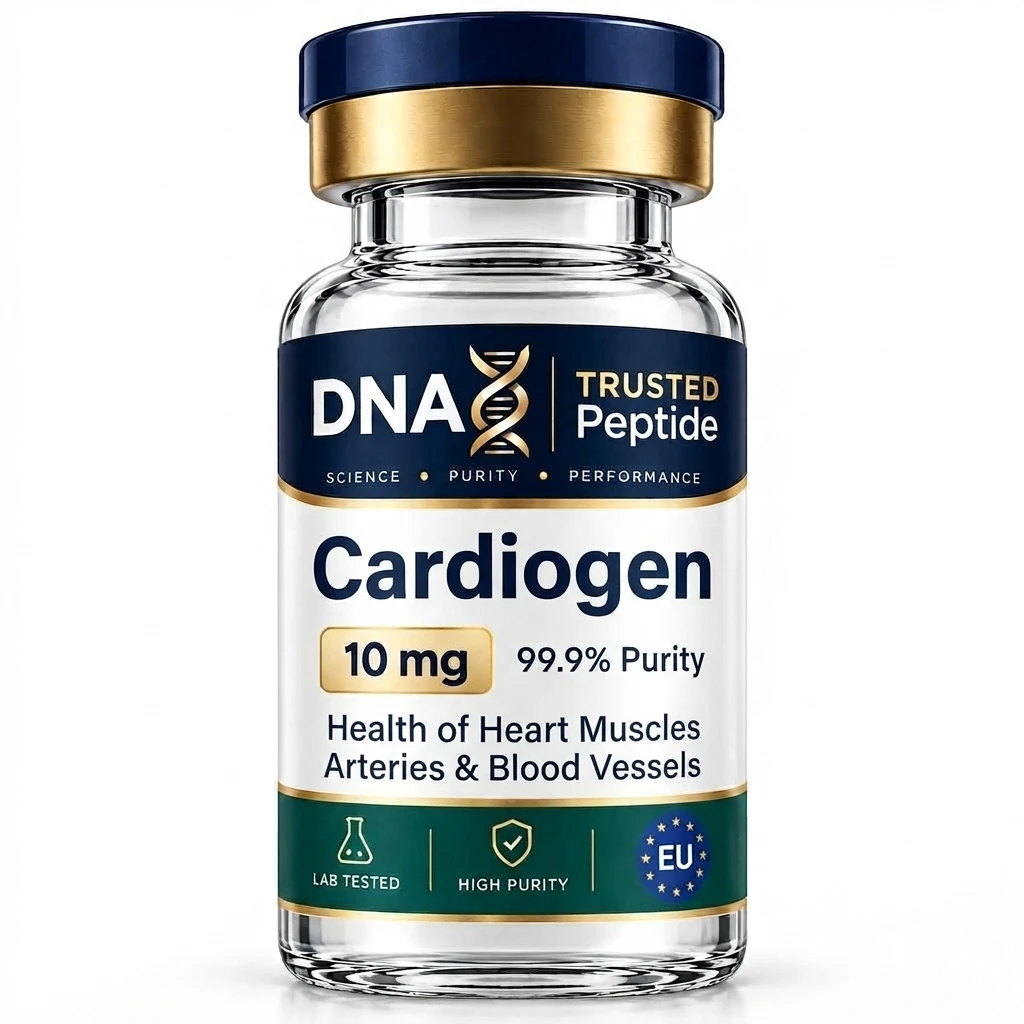

Cardiogen / Vesugen
Vascular and heart-muscle peptides that improve arterial flexibility and microcirculation and protect against atherosclerosis and cardiac strain.
Cardiogen and Vesugen are very short regulatory bioactive peptides (bioregulators) from Professor Vladimir Khavinson's Russian school, designed to target and renew the cardiovascular system at the genetic level. Cardiogen consists of four amino acids (Ala-Glu-Asp-Arg) dedicated to heart-muscle cells (cardiomyocytes): it enters the nucleus to stimulate the synthesis of structural proteins in heart cells, counter programmed cell death and inhibit scar fibrosis after ischaemia. Vesugen is a tripeptide (Lys-Glu-Asp) targeted at the lining of blood vessels (the endothelium): it stimulates the proliferation of healthy endothelial cells, increases the flexibility of vessel walls and regulates microcirculation and nitric-oxide synthesis. The two compounds are studied together as a comprehensive synergistic protocol for protecting the heart muscle and arteries from ageing, functional decline and oxygen shortage.
The integrated genetic system for restoring the heart muscle and returning flexibility to blood vessels
If you are looking to protect your heart and arteries from hardening and cellular stress in a way that resets the gene expression of the cells themselves, combining Cardiogen with Vesugen is the most important cornerstone in bioregulation research and extending the life of the circulatory system.
Classification: Cellular bioregulator peptides, heart and vascular health, renewal of the vascular lining (Bioregulators / Cardioprotective & Endothelial Regeneration).
Structurally, Cardiogen is a tiny tetrapeptide targeted at the heart muscle, while Vesugen is an ultra-small tripeptide targeted at the lining of arteries and veins. This exceptionally small molecular size lets both cross cell membranes and the nuclear membrane directly without needing complex receptors.
Picture the heart muscle and arterial network after years of high blood pressure and chronic stress: the vessel walls begin to lose their suppleness, and hard fibrous tissue builds up inside the heart in place of flexible contractile cells.
How it works
Cardiogen penetrates tired heart-muscle cells and binds DNA strands, stimulating the genes responsible for building heart proteins and inhibiting the proliferation of the fibroblasts that make hard scars, protecting heart tissue from pathological enlargement after ischaemia. At the same time, Vesugen enters the endothelial cells lining the arteries and capillaries, reactivating the production of healthy collagen and elastin and stimulating the release of nitric oxide, which relaxes vessels and lets blood flow smoothly. The result is a heart that pumps more efficiently within a flexible arterial network free of excess vascular resistance.
In research, this pair is studied in models of cardiomyopathy, prevention of heart-attack complications, atherosclerosis, chronic venous insufficiency and microvascular disease in older people and people with diabetes.
Real heart protection does not depend only on reducing outside exertion — it depends on awakening the biological codes that let tissues and vessel linings renew themselves continuously.
The bioregulator pair for protecting the heartbeat and rejuvenating the arteries. Cardiogen and Vesugen are the leading alliance in research on renewing the circulatory system at the genetic level. They belong to the class of regulatory bioactive peptides for repairing the heart muscle and improving vascular health. Their very small amino acids pass directly deep into the nucleus of heart and endothelial cells: Cardiogen stimulates the building of contractile heart tissue and resists fibrosis after clots and oxygen shortage, while Vesugen acts as an engineer of arterial-wall flexibility, boosting microcirculation and easing vascular stiffness. This biological harmony improves blood pumping, relieves the load on the circulation and counters vascular ageing with outstanding efficiency and molecular safety. Researchers study them as the newest preventive strategy for restoring heart energy and arterial flexibility from their cellular roots — because lasting youth begins with a flexible artery and a heart beating with renewed vitality.