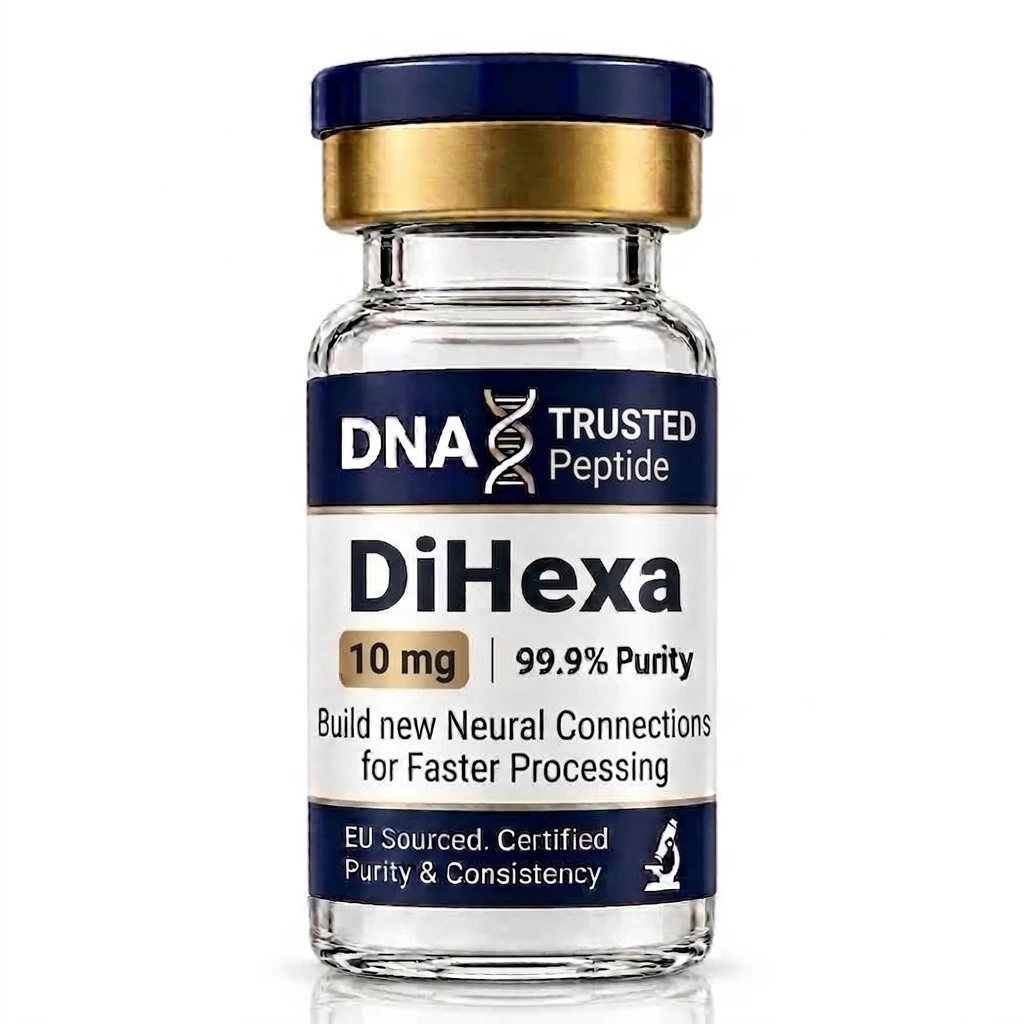

DiHexa
A small-molecule cognitive enhancer, studied in synapse-formation and cognition research.
Dihexa, chemically N-hexanoic-Tyr-Ile-(6) aminohexanoic amide, is a synthetic lipophilic oligopeptide derived from a fragment of the neuropeptide Angiotensin IV. It was developed at Washington State University to overcome Angiotensin IV's short half-life and poor penetration of the blood–brain barrier. Dihexa is an extremely potent, specific enhancer of hepatocyte growth factor (HGF): it binds HGF directly and facilitates activation of its phosphorylated receptor, c-Met. Dihexa has an exceptional ability to stimulate the formation of new synapses (synaptogenesis) and dendritic branching — millions of times more potent than brain-derived neurotrophic factor (BDNF) in laboratory models — making it a leading candidate for research into restoring cognitive function, repairing memory and treating neurodegenerative diseases.
The exceptional neural stimulator for building synaptic connections and restoring lost memory
If you are looking for the highest level of cognitive recovery and treatment of severe neural decline by building new communication networks between brain cells, Dihexa is the most astonishing scientific leap in regenerative neurology and advanced nootropic science.
Classification: Synapse-building peptides, HGF/c-Met pathway activators, and treatment of cognitive decline and Alzheimer's (Synaptogenic Peptides / HGF Mimetic / Nootropic & Neuroregenerative).
Structurally, it is a small oligopeptide modified with a fatty chain that gives it high metabolic stability and excellent, direct passage across the blood–brain barrier, overcoming the limits that held back earlier Angiotensin IV compounds.
Picture a brain affected by degeneration or severe stress as a city whose communication lines and power cables between buildings have been cut. Preserving the existing buildings (neurons) is not enough — new cables and high-speed networks must be laid to reconnect the centres.
How it works
Dihexa binds directly to hepatocyte growth factor (HGF), strengthening its binding to the c-Met receptor on neuron surfaces and triggering a cascade of phosphorylation inside the cell. This powerful biological signal stimulates the growth and branching of dendrites and builds thousands of new synapses and connection points in the hippocampus and cortex. This renewed infrastructure increases the efficiency of neurotransmission and the retrieval of stored information, translating into a fundamental boost to spatial and working memory, faster comprehension and the rebuilding of lost motor and cognitive functions.
In research settings, Dihexa is studied as a promising treatment for Alzheimer's disease, Parkinson's disease, traumatic brain injury (TBI) and age-related cognitive decline, because of its laboratory-proven ability to reverse synaptic damage rather than merely slow its progression.
Restoring intelligence and sharp memory is not just about temporarily stimulating the brain — it begins with building new neural bridges that connect thoughts deep within the neural tissue.
Building synapses and reviving memory pathways deep in the brain. Dihexa is the most powerful biological breakthrough in research on regenerating the central nervous system and fighting mental decline. It belongs to the class of peptides that stimulate the formation of neural connections and activate the HGF and c-Met pathway. Its modified peptide molecule has an exceptional ability to cross the blood–brain barrier, binding neural growth factors and releasing an intense wave of new dendritic branches and synapses in the memory and learning areas. Its mechanism links isolated neurons into high-speed networks, helping to recover fading memories, increase processing speed and protect the brain from the effects of ageing and traumatic damage with far greater efficiency than classic compounds. Scientists study it as a revolutionary hope for dementia and Alzheimer's and for restoring mental abilities to their peak — because cognitive brilliance begins with a strong network of neural connections that grows denser and stronger day by day.