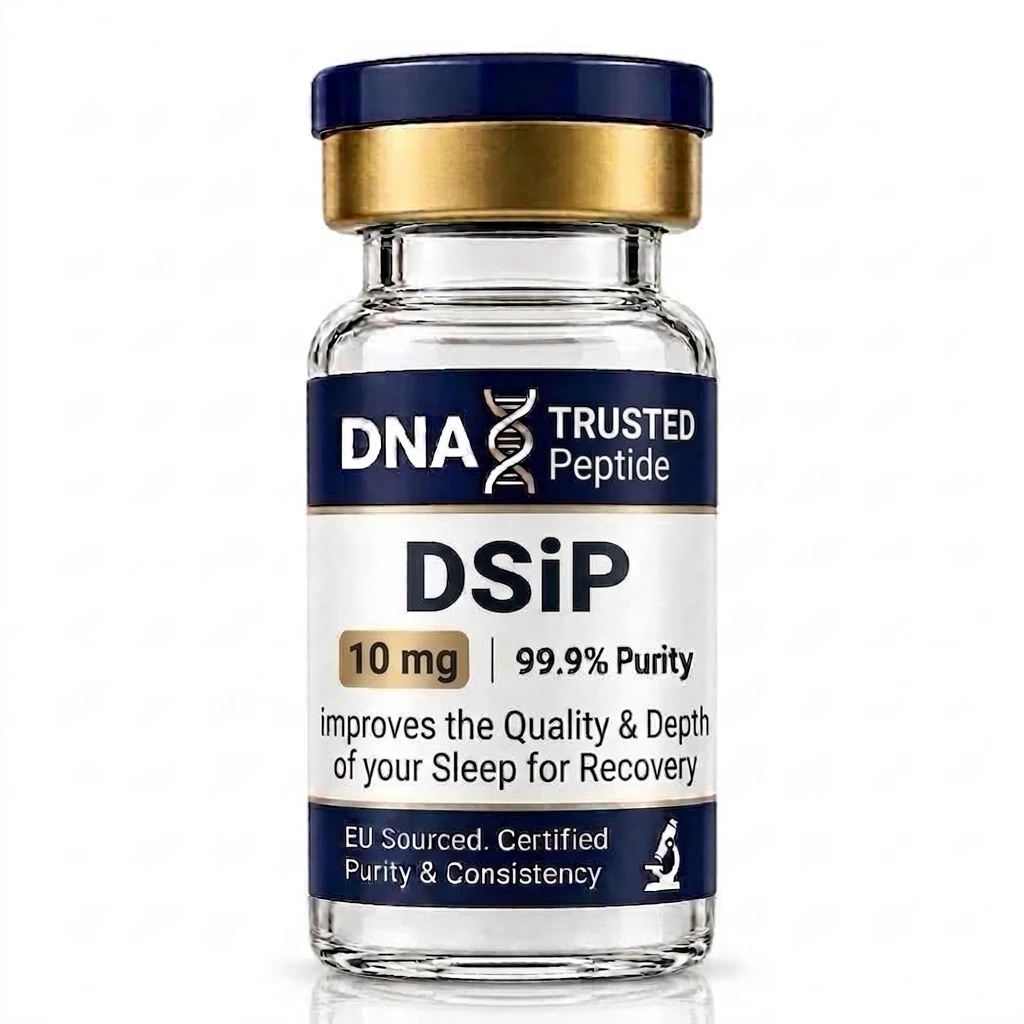

DSIP
Delta sleep-inducing peptide, studied in sleep-regulation and stress-response research.
DSIP (Delta Sleep-Inducing Peptide) is an endogenous neuropeptide of nine amino acids (Trp-Ala-Gly-Gly-Asp-Ala-Ser-Gly-Glu), first isolated in 1977 from the cerebral venous blood of rabbits placed in electrically induced sleep. It is able to cross the blood–brain barrier through specialised transport and targeting mechanisms, acting as a rhythmic physiological regulator of brain activity without behaving like a forceful sedative or a traditional sleeping pill. DSIP stimulates slow delta brain waves (delta-wave electroencephalogram activity), which drive the deep, restorative stage of sleep. It also modulates stress-related hormones along the hypothalamic-pituitary-adrenal (HPA) axis — restraining cortisol and prolactin and modulating thyroid-stimulating hormone (TSH) — and shows stress-protective and antioxidant properties in the central nervous system.
The innate neuroregulator for resetting the deep-sleep rhythm and resisting acute stress
If you want to restore the deep delta sleep that repairs body and mind — without getting caught in synthetic sleeping pills that cause dependence and morning grogginess — DSIP is the biological key the brain itself uses to calm its neural storms.
Classification: Sleep-regulating peptides, protection against neural stress and circadian-rhythm regulation (Sleep-Inducing Peptides / Neuromodulators / Neuroendocrine Regulators).
Structurally, it is a precise nonapeptide chain of nine amino acids arranged in a sequence that lets it interact quickly with the neural pathways that regulate sleep, without general suppression of the nervous system or artificial sedation.
Picture the brain after a long day of pressure and stress: fast beta waves and cortisol stay high like alarm sirens, preventing you from moving into the deep stages of rest and repair of strained tissue.
How it works
DSIP reaches deep into the brain's hypothalamic centres and interacts with the neural receptors responsible for slow-frequency delta electrical waves, the hallmark of deep non-REM sleep (NREM stages 3/4). It does not force sleep like sleeping pills; instead it removes the brakes and prepares the nervous system to enter a balanced recovery cycle naturally — lowering high cortisol, regulating melatonin release and reducing oxidative stress inside nerve cells. The result is smooth immersion in deep, steady sleep, followed by waking with full mental and physical energy and no sluggishness or brain fog.
In research settings, DSIP is studied in models of chronic insomnia, easing withdrawal symptoms from painkillers and opioids, supporting mood stability in chronic neural stress, and improving night-time growth-hormone release that accompanies delta waves.
Perfect sleep is not achieved by forcibly shutting the brain down — it comes from giving it the natural signal that guides it into the deep stages of rest and self-repair.
Resetting deep sleep and restorative delta waves with outstanding neural safety. DSIP is the most authentic biological regulator in sleep physiology and the fight against neural stress. It belongs to the class of neuropeptides that regulate the biological rhythm and quiet tension. Made of nine amino acids designed to pass smoothly into the brain's sleep centres, it re-releases the slow delta waves responsible for deep restorative sleep without forced sedation or artificial sleep. Its mechanism restrains anxiety hormones and cortisol and rebalances strained neurotransmitters, helping to overcome chronic insomnia, improving tissue renewal and night-time growth-hormone release, and allowing you to wake with full mental clarity and no staggering or lethargy. Scientists study it as a leading solution for sleep disorders and recovery from neural exhaustion in a way that mimics the body's innate chemistry — because real rest begins by restoring harmony to the brain's natural signals that lead it peacefully into sleep.