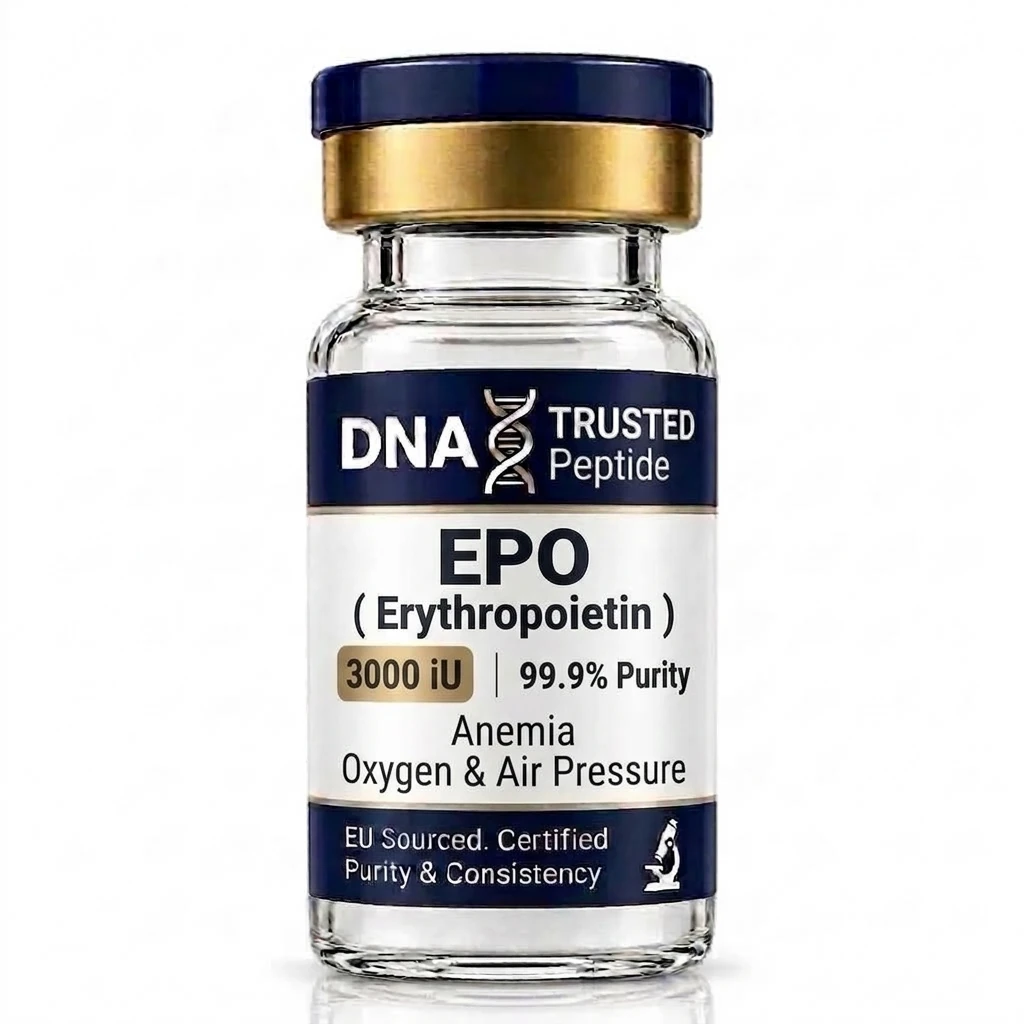

EPO (Erythropoietin)
A glycoprotein hormone that stimulates red-blood-cell production in the bone marrow, greatly increasing oxygen-carrying capacity and endurance performance.
Erythropoietin (EPO), available in several recombinant forms (rHuEPO such as epoetin alfa and darbepoetin alfa), is an endogenous glycoprotein hormone of 165 amino acids secreted mainly by interstitial cells in the renal cortex in response to tissue hypoxia. Erythropoietin is the main regulator and selective stimulator of red-blood-cell formation (erythropoiesis): it binds specialised receptors (EPO-R) on haematopoietic progenitor cells (CFU-E and BFU-E) in the bone marrow. This binding activates JAK2/STAT5 signalling, preventing programmed death of those cells and speeding their differentiation and maturation into mature, haemoglobin-laden red blood cells, raising total red-cell mass and the oxygen-carrying capacity of the circulation. In addition, erythropoietin has a non-haematopoietic tissue receptor (EphB4 / heterodimeric receptor) that gives it neuroprotective and cardioprotective properties against cell death and ischaemia.
The vital engine of red-blood-cell production that multiplies the body's oxygen-carrying capacity
If physical performance and cardiovascular endurance depend mainly on the amount of oxygen flowing to muscle fibres and vital organs, erythropoietin (EPO) is the body's first biological regulator for controlling red-blood-cell density and fighting anaemia and cellular stress.
Classification: Haematopoietic hormones and proteins, erythropoiesis stimulators, improved oxygen transport and tissue protection (Erythropoiesis-Stimulating Agents / ESAs / Tissue-Protective Cytokines).
Structurally, it is a complex glycopeptide hormone with extensive glycosylation that protects it from rapid breakdown in the liver and gives it a suitable half-life, allowing it to bind bone-marrow receptors precisely and stimulate them at clinically studied doses.
Picture the bone marrow as a giant red-cell factory waiting for orders and raw materials. When tissue oxygen levels fall or kidney function declines, the kidneys release the erythropoietin signal telling the factory to push its production lines to full capacity.
How it works
Erythropoietin travels through the bloodstream to the bone marrow and binds EPO-R receptors on the surface of blood-cell precursors. This binding sets off chemical cascades that activate JAK2 and STAT5 proteins, stopping the self-destruction of those cells and driving them to divide rapidly and make haemoglobin. Millions of new red blood cells flow into the arteries, raising the packed-cell volume (haematocrit) and total haemoglobin. This translates into a large increase in oxygen delivery to muscle and brain tissue, delayed lactic-acid build-up, and a higher aerobic-endurance threshold and resistance to fatigue. In parallel, its anti-apoptotic pathway supports heart and brain tissue against ischaemic shock. Blood viscosity and blood pressure must be closely monitored to avoid clotting.
In clinical and research settings, it is the cornerstone treatment for anaemia associated with chronic kidney failure and anaemia caused by cancer chemotherapy, and for reducing the need for transfusion in major surgery. It is also studied for protecting nerve cells after strokes and acute trauma.
Multiplying physical endurance does not come from breathing faster — it comes from having the cellular fleet able to load that oxygen and distribute it efficiently to every cell.
The greatest biological stimulator of red-blood-cell production and oxygen flow. Erythropoietin is the core hormone relied on in haematology and biomedicine to stimulate the renewal and production of red blood cells. It belongs to the class of haematopoiesis-stimulating agents that treat anaemia and support tissue protection. Its molecular structure is a pure glycoprotein that fully mimics the hormone the kidneys release when oxygen is low, travelling directly to the bone marrow to bind the specialised blood-forming receptors. Its mechanism prevents the death of blood-producing cells and drives their rapid maturation, increasing red blood cells and raising haemoglobin — multiplying the oxygen reaching the muscles and vital organs, delaying physical exhaustion and protecting brain and heart tissue from oxidative stress. Doctors rely on it as a central treatment for resistant anaemia and chronic kidney disease, and researchers study it as the most important driver of aerobic endurance and tissue vitality — because high energy begins with a strong blood fleet able to deliver oxygen to the smallest cells of the body.