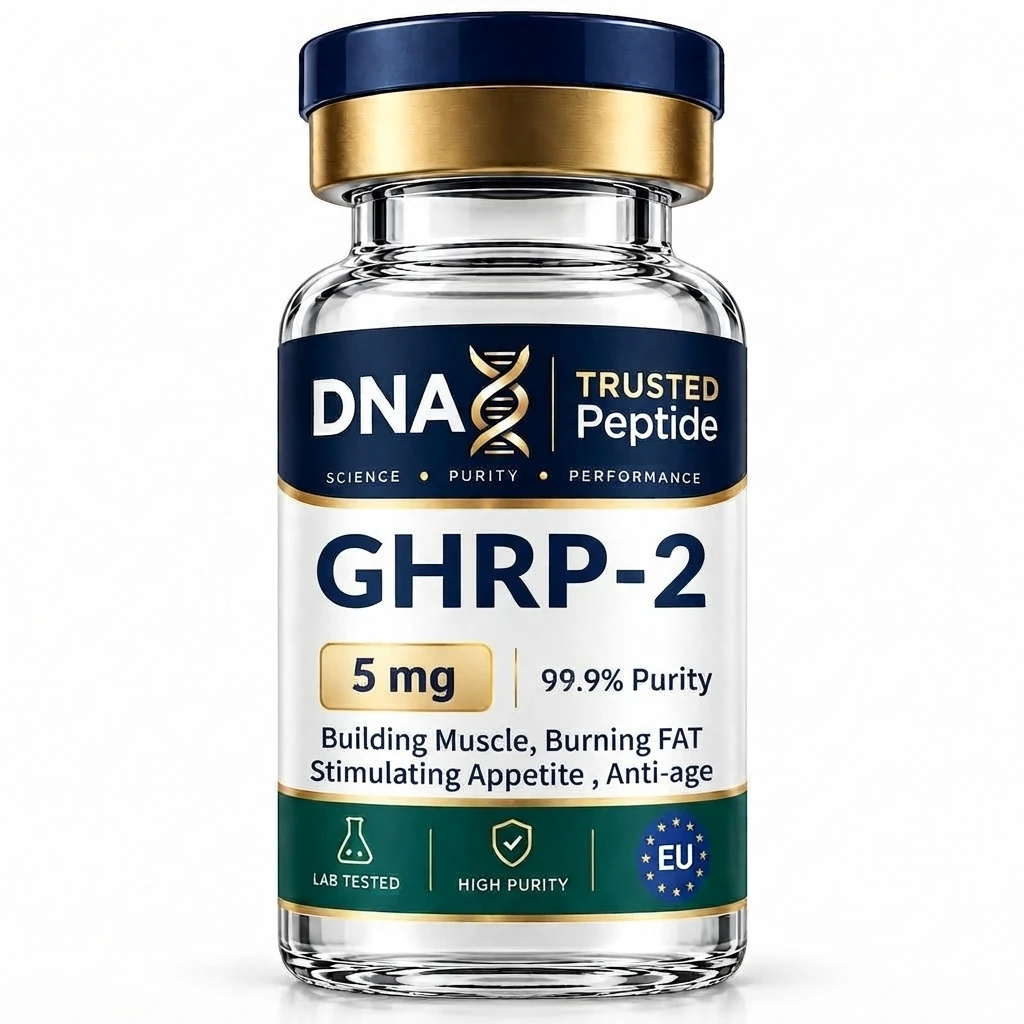

GHRP-2
A potent ghrelin mimetic and growth-hormone secretagogue that strongly stimulates GH release from the pituitary, raising IGF-1 levels and supporting appetite.
GHRP-2 (Growth Hormone Releasing Peptide-2), also known chemically as Pralmorelin, is a synthetic hexapeptide (D-Ala-D-β-Nal-Ala-Trp-D-Phe-Lys-NH2) belonging to the second generation of ghrelin mimetics and growth-hormone secretagogues (GH Secretagogues). Its structure includes D-form amino acids that increase its resistance to enzymatic breakdown by plasma peptidases, giving it biological stability and highly effective stimulating power. GHRP-2 acts as a specific agonist of the growth-hormone secretagogue / ghrelin receptors (GHSR-1a) in the anterior pituitary and the hypothalamus. Receptor binding triggers the phospholipase C signalling pathway (PLC/IP3/DAG), increasing intracellular calcium influx and releasing strong, large pulses of endogenous growth hormone (GH) into the bloodstream, followed by a rise in insulin-like growth factor-1 (IGF-1) from the liver. It has a milder appetite-stimulating effect than the first generation (GHRP-6), with slight, controlled increases in prolactin and cortisol secretion at high doses.
The high-powered pulsatile growth-hormone stimulator for faster fat burning and rebuilding of musculoskeletal tissue
If you are looking to restore strong growth-hormone pulses to support the burning of stubborn fat, gain clean muscle mass and speed the healing of joints and tendons with a balanced increase in appetite and no lethargy, GHRP-2 is the most reliable and powerful classic cornerstone among growth-hormone-releasing peptides.
Classification: Growth-hormone secretagogues, ghrelin-receptor agonists, muscle building and recovery (Growth Hormone Secretagogues / GHSR-1a Agonists / Muscle Recovery).
Structurally, it is a hexapeptide chemically designed with an amidated end and non-natural stereo-isomeric amino acids, ensuring it stays in circulation long enough to stimulate pituitary cells more efficiently than first-generation secretagogues.
Picture the pituitary gland as a huge energy reservoir holding a large store of growth hormone, but needing a precise, direct press of a button to release that store into the bloodstream all at once to repair the body and burn fat. This peptide acts as the direct key to that valve.
How it works
GHRP-2 binds ghrelin receptors (GHSR-1a) on the surface of growth-hormone-secreting cells in the pituitary, while at the same time suppressing the inhibitory effect of somatostatin in the hypothalamus. This dual action opens calcium channels inside the cells, prompting secretory vesicles to release concentrated, pulsatile bursts of human growth hormone into the blood. This sharp rise in growth hormone drives the liver to produce IGF-1, which speeds the breakdown of fatty acids into energy, increases protein synthesis in muscle fibres and rebuilds collagen in worn ligaments and cartilage, with a noticeable improvement in recovery after hard training and in the quality of deep sleep.
In research and medical settings, GHRP-2 is an established diagnostic and clinical tool for studying pituitary insufficiency and growth-hormone deficiency. It is also regularly studied in protocols for muscle wasting and severe cachexia and for the rehabilitation of sports injuries, alongside GHRH peptides such as CJC-1295 to achieve the greatest possible physiological synergy.
Stimulating growth hormone does not require external compounds that may disrupt your own production — it relies on sending the right signal to safely release your body's own store of building hormones.
The most powerful pulsatile stimulator for releasing your own growth hormone and speeding recovery. GHRP-2 is the leading and most established compound in research on pituitary stimulation and raising natural growth-hormone levels. It belongs to the class of growth-hormone secretagogues and ghrelin-receptor agonists for improving body composition and increasing muscle-building efficiency. Its modified six-amino-acid structure resists rapid breakdown and reaches the pituitary receptors directly, instructing the gland to open its valves and pump strong, concentrated pulses of growth hormone into the circulation. Its mechanism raises IGF-1 levels in the liver, speeding the breakdown of stubborn fat, building clean muscle fibres and repairing strained tendons and joints, while supporting energy and fast recovery after physical exhaustion. Researchers and doctors study it as a gold standard for reactivating natural growth secretion and countering metabolic decline with exceptional efficiency — because remarkable recovery begins by releasing the energy of your innate hormones directly from their pituitary source.