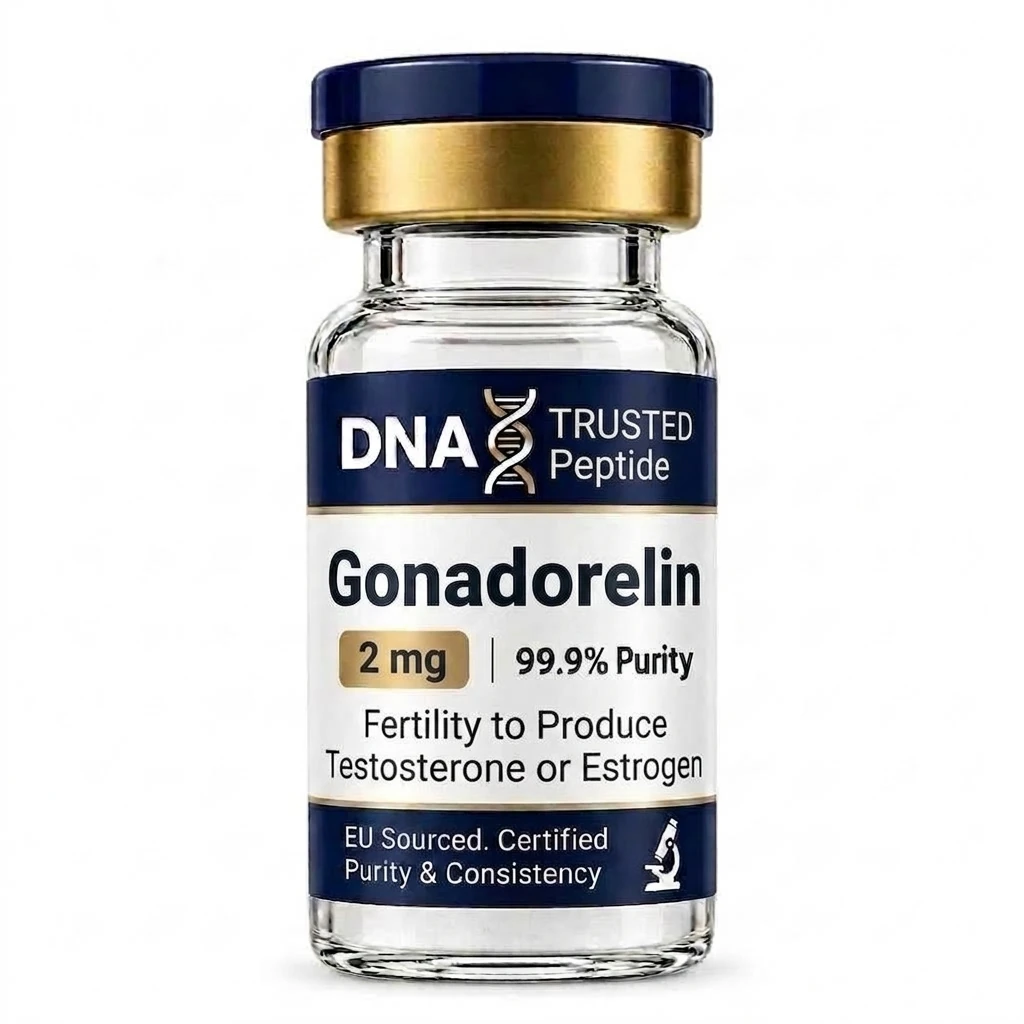

Gonadorelin
A synthetic GnRH decapeptide, studied in reproductive-axis and hormonal-regulation research.
Gonadorelin is a synthetic decapeptide that is structurally and chemically 100% identical to natural human gonadotropin-releasing hormone (GnRH / LHRH), with the peptide sequence pyroGlu-His-Trp-Ser-Tyr-Gly-Leu-Arg-Pro-Gly-NH2. Physiologically, GnRH is produced and released in periodic pulses by neurons of the arcuate nucleus and preoptic area of the hypothalamus. Gonadorelin is a direct, selective agonist of Gq-coupled GnRH receptors on gonadotroph cells in the anterior pituitary. Its binding, matched to physiological pulses, triggers the PLC/IP3/DAG signalling pathway to raise intracellular calcium, stimulating balanced synthesis and release of luteinising hormone (LH) and follicle-stimulating hormone (FSH). These hormones travel through the circulation to the gonads, stimulating testosterone production and sperm formation in the Leydig and Sertoli cells of the testes in men, or follicle maturation, ovulation and oestrogen and progesterone secretion in women. There is a critical physiological distinction between periodic pulsatile stimulation, which activates the axis, and continuous high-dose exposure, which causes desensitisation (down-regulation) and complete suppression of the reproductive axis.
The identical GnRH mimetic for resetting fertility signals and releasing natural testosterone
If you want to restart the reproductive and fertility axis (HPGA) and restore natural secretion of male and fertility hormones after suppression or pituitary insufficiency — without introducing compounds foreign to the body — Gonadorelin is the biological version fully identical to the original neural signal your brain sends.
Classification: Gonadotropin-releasing peptides, regulation of fertility and the testosterone axis, and diagnostic and therapeutic GnRH analogues (Gonadotropin-Releasing Hormone Analogues / LH & FSH Stimulators / Fertility & Hormone Restoration).
Structurally, it is a decapeptide identical to the body's own hormone, with protected ends (pyroglutamate and an amidated terminus) that give it complete binding affinity for pituitary receptors without off-target side reactions in other tissues.
Picture the reproductive hormonal axis as a communications circuit that starts with a message from the brain's control room (the hypothalamus) to the pituitary transmitter station. When that link is cut by external steroids, stress or functional insufficiency, the whole axis falls silent and fertility and the body's own hormone production decline.
How it works
Gonadorelin reaches the pituitary and binds its GnRH receptors directly, sending the original physiological signal that opens calcium channels and instructs pituitary cells to make and release LH and FSH into the bloodstream. LH goes straight to the testes, prompting Leydig cells to convert cholesterol into natural testosterone, while FSH acts on Sertoli cells to revive and support sperm production and maintain the size and efficiency of the gonads. Carefully planned pulsatile use of gonadorelin restores internal hormonal activity, prevents testicular atrophy and counters infertility and hypofunction, preserving the body's own physiological balance without suppressing or straining the gland.
In clinical and research settings, gonadorelin is used as a diagnostic standard for assessing the pituitary's capacity and reserve for releasing gonadotropins, in protocols for restoring gonadal function after intensive hormonal treatment, in treating delayed puberty, and in infertility caused by hypothalamic insufficiency in both sexes.
Restoring hormonal balance and fertility does not require flooding the body with manufactured hormones — it means sending the identical neural message that instructs your glands to resume producing their own hormones safely and harmoniously.
The original biological signal for reactivating fertility hormones and the body's own testosterone. Gonadorelin is a complete molecular match for the brain hormone that leads the body's reproductive and fertility axis. It belongs to the class of gonadotropin-releasing peptides that activate LH and FSH and restore natural hormonal balance. Its pure ten-amino-acid structure mimics, with great precision, the natural signals sent from the hypothalamus to the pituitary, instructing its cells to produce and release gonad-stimulating hormones into the bloodstream without any foreign compounds. Its mechanism awakens internal testosterone production, activates fertility functions, stimulates sperm production and protects the gonads from the atrophy and sluggishness caused by hormonal suppression or ageing. Doctors rely on it as a key diagnostic and therapeutic tool for assessing and treating hypogonadism and restoring physiological balance after complex hormonal treatments — because lasting hormonal health begins by reconnecting the natural link between your brain's control centres and your vital glands.