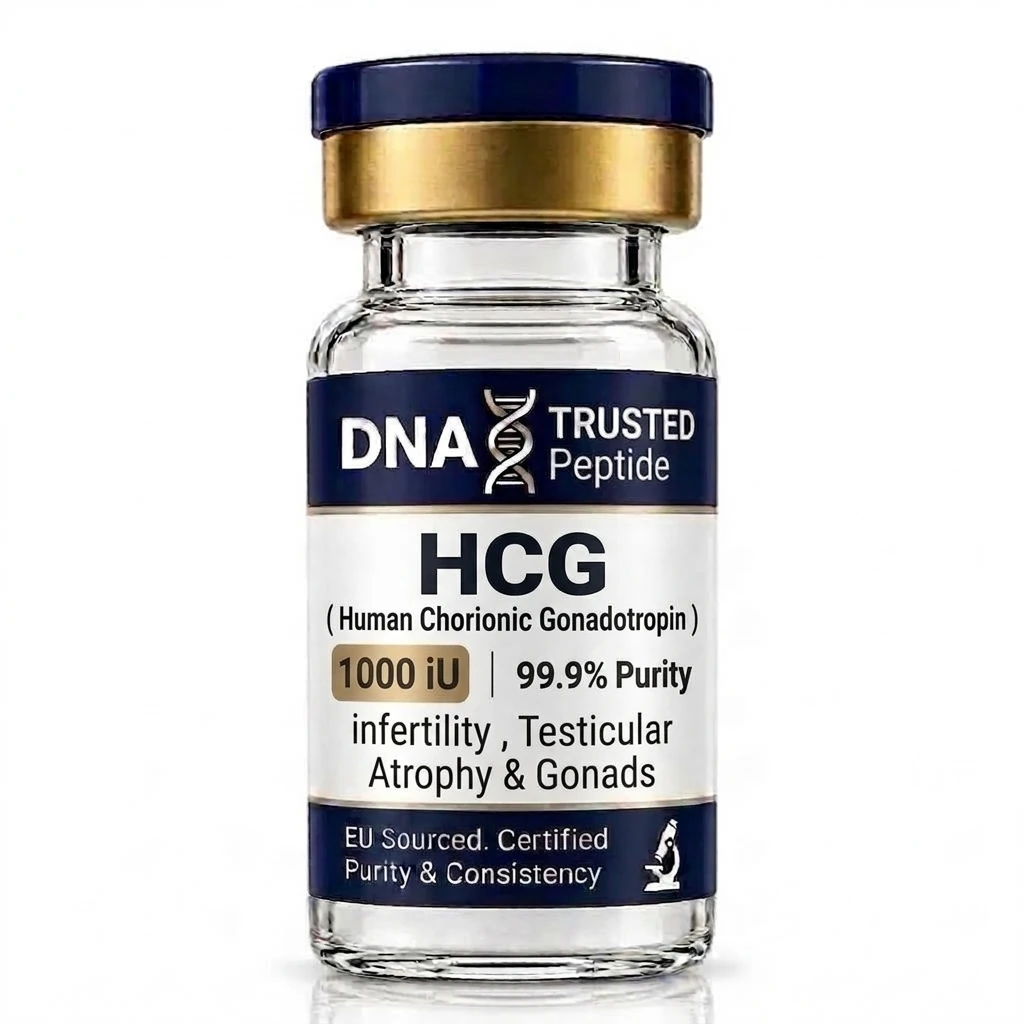

HCG (Human Chorionic Gonadotropin)
Directly mimics LH, binding Leydig-cell receptors in the testes to stimulate the body's own testosterone production and prevent testicular atrophy.
Human Chorionic Gonadotropin (hCG) is a heterodimeric glycoprotein hormone made of two non-identical, non-covalently linked subunits: an alpha (α) subunit of 92 amino acids (structurally identical to that of LH, FSH and TSH) and a distinct beta (β) subunit of 145 amino acids, which gives it its high biological specificity and independent activity. hCG is naturally secreted by the syncytiotrophoblast of the placenta during pregnancy to maintain the corpus luteum, and is obtained medically from urine or made by recombinant DNA technology (rhCG). hCG acts as a very potent, long-acting mimetic of luteinising hormone (LH): it binds directly and with high affinity to the Gs-coupled LH/hCG receptors on Leydig cells in the testes in men, or on theca cells and the corpus luteum in the ovaries in women. This binding triggers the adenylate cyclase pathway, raising cAMP and activating protein kinase A (PKA), which stimulates the StAR protein that carries cholesterol into the mitochondria. The result is production of the body's own testosterone and activation of sperm production, or stimulation of ovulation and progesterone production. It has a long half-life of about 24–36 hours, compared with the short half-life of LH.
The biological LH mimetic for protecting Leydig cells and activating testosterone production and fertility at the source
If you are looking to restore testicular activity, maintain the function and size of the reproductive glands and avoid atrophy of the cells that produce male hormones during or after treatment protocols that shut down the hormonal axis, hCG is the most effective and trusted medical tool for mimicking direct LH signals.
Classification: Gonadotropin hormones, LH mimetics, restoration of fertility and the body's own testosterone production (Gonadotropins / LH Receptor Agonists / Fertility & Testosterone Restoration).
Structurally, it is a two-chain glycoprotein hormone reinforced with complex sugar chains in its beta subunit. This modification gives it exceptional stability in the circulation and resistance to rapid breakdown by the liver and kidneys compared with natural LH, allowing it to work at spaced-out doses whose effect lasts for days.
Picture the testes as a power station waiting for the electrical signal from the main cable coming from the brain (LH). When that current is cut off by the use of external hormones or an inactive pituitary, the station goes into hibernation and its cells begin to decline and shrink. hCG arrives as a very powerful back-up power supply that feeds the station directly and runs the production lines without waiting for the brain.
How it works
hCG travels through the bloodstream to the Leydig cells in the testes and binds the shared LH receptors with identical efficiency, sending an immediate order to move cholesterol into the mitochondria to produce testosterone inside the testis (intratesticular testosterone – ITT). This critical local rise in testicular testosterone is an indispensable physiological condition for nourishing Sertoli cells, keeping sperm production going and avoiding infertility and atrophy of reproductive tissue. In women, it mimics the mid-cycle LH surge to stimulate final egg maturation and ovulation and support progesterone secretion to prepare the uterine lining. The result is full biological protection of the reproductive glands, restoring their ability to work efficiently and preventing them from shutting down.
In clinical and research settings, hCG is the cornerstone of protocols for restoring reproductive-gland function (PCT), treating secondary hypogonadism (hypogonadotropic hypogonadism) and undescended testes in children, as well as ovulation-induction protocols and infertility treatment in assisted reproduction (IVF).
Keeping fertility and male-hormone production alive is not just a matter of waiting for the brain to wake up — it depends on supplying the target glands with the biological fuel that protects their cells from atrophy and keeps them functioning.
The direct mimic of puberty and fertility signals for protecting and activating the reproductive glands. hCG is the reference treatment in reproductive medicine for maintaining the function and output of the testes and ovaries at the source. It belongs to the class of gonadotropin hormones that activate the body's own testosterone, restore fertility and protect reproductive tissue from atrophy. Its highly pure glycoprotein structure mimics natural LH with great precision and a longer life in the body, binding directly to Leydig-cell receptors and instructing them to generate male hormone and nourish sperm continuously. Its mechanism breaks the inactivity of the reproductive glands caused by hormone treatments or pituitary insufficiency, preserving tissue size, protecting reproductive function and preventing a sharp hormonal drop, with clinically proven effectiveness recognised worldwide. Doctors and scientists rely on it as an indispensable protective shield in hormonal recovery protocols, delayed-fertility treatment and safely restoring lost physiological balance — because maintaining the body's efficiency begins by protecting its vital glands and keeping their innate energy running without interruption.