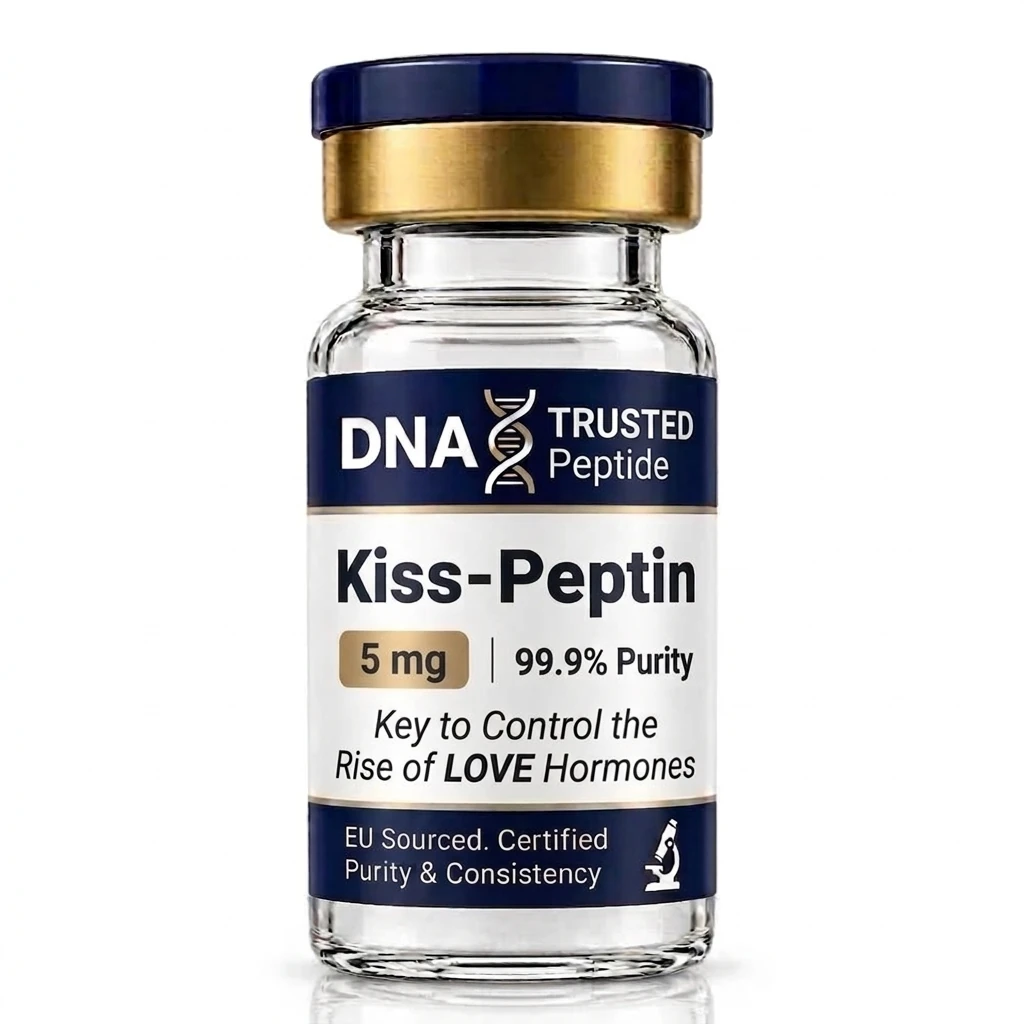

Kiss-Peptin
A kisspeptin analogue, studied in reproductive-axis and hormonal-signalling research.
Kisspeptin, also known as Metastin, is an endogenous neuropeptide encoded by the KISS1 gene. It is produced physiologically as a 145-amino-acid protein precursor, which is enzymatically processed into several bioactive peptides sharing the distinctive 10-amino-acid amidated C-terminus (Kisspeptin-10), along with longer forms such as Kisspeptin-54, Kisspeptin-14 and Kisspeptin-13. Kisspeptin is the main specific agonist of a G-protein-coupled receptor known as KISS1R (or GPR54), and is the supreme physiological regulator and master switch of the reproductive axis (HPGA — Hypothalamic-Pituitary-Gonadal Axis). Kisspeptin neurons are located in the arcuate nucleus (ARC) and the anteroventral periventricular area (AVPV) of the hypothalamus, where they signal directly to gonadotropin-releasing hormone (GnRH) neurons to stimulate its pulsatile release. This triggers a cascade that prompts the pituitary to release luteinising hormone (LH) and follicle-stimulating hormone (FSH), activating Leydig cells in the testes to produce natural testosterone and sperm in men, or stimulating ovulation and female hormonal balance in women — in addition to its originally discovered role as a key suppressor of malignant tumour spread (Metastasis Suppressor).
The supreme central neural switch for awakening the reproductive axis, fertility and natural testosterone
If you want to restore hormonal activity and fertility from the highest command point in the brain — restarting natural testosterone production without suppressing the pituitary or using synthetic hormones that shut the body down — Kisspeptin is the true molecular key that starts the body's cycle of puberty and fertility.
Classification: Neuropeptides regulating the reproductive axis, GPR54 receptor agonists, restarting fertility and endogenous testosterone, and metastasis suppressors (Neuroendocrine Peptides / GPR54 Agonists / Master Reproductive Regulators).
Structurally, it consists of short, active peptide sequences (the best known being Kisspeptin-10) sealed by an amidated C-terminus that gives them excellent rapid penetration and highly selective binding to neural GPR54 receptors in the brain and endocrine centres.
Picture the reproductive hormonal axis as a giant electrical grid that begins with a master transformer in the neural command centre. If that transformer fails and signals stop, forcing the peripheral devices on is useless. Kisspeptin acts as the master switch that resets the first circuit breaker, restoring current to the whole hormonal grid in perfect physiological harmony.
How it works
Kisspeptin reaches GnRH neurons in the hypothalamus and binds GPR54 receptors, triggering a rapid rise in intracellular calcium. This direct stimulation drives these neurons to release natural pulses of GnRH towards the pituitary, which responds immediately by making and releasing strong, balanced pulses of LH and FSH into the bloodstream. In men, LH reaches the testes and instructs Leydig cells to produce pure endogenous testosterone, while FSH supports sperm quality and motility — restoring size and activity to the gonads and addressing infertility linked to axis suppression. In women, kisspeptin stimulates the physiological LH surge needed for regular ovulation without the ovarian hyperstimulation common with other stimulants, alongside its protective effect in preventing the spread and migration of uncontrolled cells within tissues.
In clinical and research settings, kisspeptin is a revolutionary focus for diagnosing and treating hypogonadism caused by stress and neural dysfunction, protocols for restoring reproductive activity after long suppression, safe ovulation induction in assisted-fertility clinics, and research into preventing the spread of malignant tumours — thanks to its safety and uniqueness as a natural top-level regulator.
Restoring male balance and fertility does not require flooding the body with external hormone replacements — it relies on switching on the innate neural key that drives the body's own hormonal system from its roots.
The top neural switch for reigniting fertility hormones and natural testosterone from the summit of the brain. Kisspeptin is the landmark scientific discovery in neuroendocrinology for controlling the switches of puberty and innate reproductive activity. It belongs to the class of neuropeptides that regulate the reproductive axis, restart the body's own testosterone production and stimulate healthy ovulation. Its highly precise structure binds exclusively to GPR54 receptors in the neural control centres, sending a direct command to release GnRH, which wakes the pituitary to pump LH and FSH into the circulation. Its advanced mechanism restarts the testosterone factories in the testes, supports sperm production and gonadal size, and protects hormonal balance from the dormancy caused by stress or prior suppressive treatments — with a biological safety that mimics the body's natural rhythm without self-suppression. Scientists study it as a fundamental solution for restoring deep fertility and countering pituitary insufficiency — because true hormonal health begins by awakening the original signal that drives the system of life from its first source in the brain.