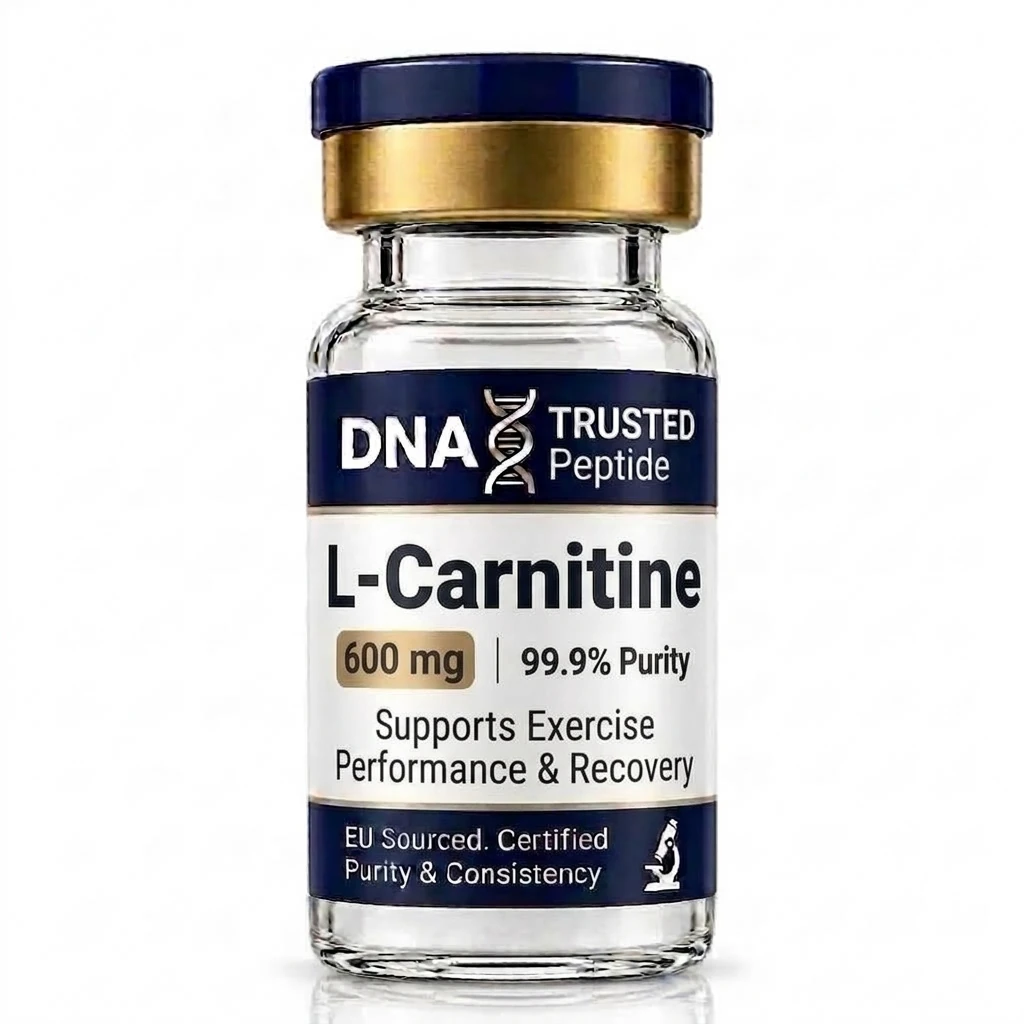

L-Carnitine
A transporter amino acid that carries long-chain fatty acids into the mitochondrial matrix to generate ATP, supporting exercise performance and fat oxidation.
L-Carnitine, chemically 3-hydroxy-4-N,N,N-trimethylaminobutyrate, is a quaternary-ammonium amino-acid-like derivative synthesised in the liver and kidneys from the essential amino acids lysine and methionine with the help of vitamin C, iron, niacin and vitamin B6. It is the obligatory and only physiological carrier of long-chain fatty acids across the inner mitochondrial membrane, which fatty acyl-CoA cannot cross on its own. It works through the carnitine shuttle system, which includes carnitine palmitoyltransferase 1 and 2 (CPT-1 and CPT-2) and the carnitine/acylcarnitine translocase (CACT). Through this pathway, L-carnitine carries fatty acids into the mitochondrial matrix for beta-oxidation and ATP production, while also exporting excess short- and medium-chain acyl groups to regulate the ratio of acyl-CoA to free CoA inside the mitochondria — protecting vital enzymes from metabolic toxicity and enhancing aerobic activity and muscle and heart contraction.
The obligatory metabolic carrier for burning fatty acids and turning stored fat into clean mitochondrial energy
If you are looking for the proven physiological tool for raising the burning of stubborn fat, using fat stores as direct fuel for exercise, and supporting heart-muscle energy, muscle recovery and reduced physical fatigue, L-Carnitine is the cellular charger and shuttle without which not a single cell can burn a drop of fat.
Classification: Fatty-acid transport regulators, mitochondrial energy enhancers, support for athletic performance and heart health (Mitochondrial Fatty Acid Shuttles / Ergogenic Aids / Cardiometabolic Support).
Structurally, it is a polar, water-soluble nitrogenous molecule derived from amino acids, in the biologically active L form, giving it full affinity for the cellular carnitine transporters (OCTN2) and the transport enzymes across the mitochondrial membranes without placing a metabolic burden on the organs.
Picture your fat cells as trucks unloading tonnes of fuel (fatty acids) outside a power station (the mitochondria). But the station's doors are shut and no fuel gets in except through a dedicated lift with a single key. L-Carnitine is the lift key that carries the barrels of fat into the furnaces to generate the body's electricity and energy.
How it works
More than 95% of L-carnitine is concentrated in muscle tissue and the heart. There it binds CPT-1 on the outer mitochondrial membrane, picking up fatty acyl molecules and converting them to acylcarnitine. This compound crosses the inner membrane into the heart of the mitochondrion, where carnitine is released to return empty, while the fatty chains immediately enter beta-oxidation to produce large bursts of the ATP needed for muscle contraction and heart function. At the same time, L-carnitine collects the toxic by-products of accumulated acyl groups and removes them from the mitochondria, maintaining enzymatic balance, delaying lactic-acid build-up in muscles and reducing fibre damage after hard exercise. It also supports nitric-oxide efficiency and blood flow in small vessels, and increases sperm vitality and motility by supplying them with the energy they need to move.
In clinical and sports settings, L-carnitine and its specialised forms are a cornerstone in supporting patients with heart-muscle failure and angina, in chronic kidney failure and dialysis fatigue, in fat-burning protocols and athletic recovery, and — importantly — in treating poor sperm motility and improving male fertility.
Burning fat and producing energy do not need nerve-straining stimulants — they depend on supplying the mitochondria with the innate biological carrier that brings fat directly to the cell's energy furnaces.
The biological shuttle that carries fat and turns it into powerful mitochondrial energy, supporting muscle recovery. L-Carnitine is the body's essential natural carrier, without which no fatty acids can be burned. It belongs to the class of metabolic enhancers and fat carriers that support physical fitness, heart health and fertility. Its high-purity, peptide-like structure acts as a precise mechanical lift that carries long-chain fatty acids from the cell's cytoplasm into the mitochondrial furnaces, where they are broken down into clean energy that feeds the muscles and heart. Its unique mechanism speeds fat burning during movement and effort, delays fatigue by clearing metabolic waste from the mitochondria, supports vascular flexibility and protects muscle fibres from damage after hard exercise. Doctors and athletes rely on it as a trusted physiological standard for raising endurance and supporting heart-muscle health and sperm activity with complete organic safety — because real energy and body sculpting come from enabling your cells to use their stored fat as continuous biological fuel.