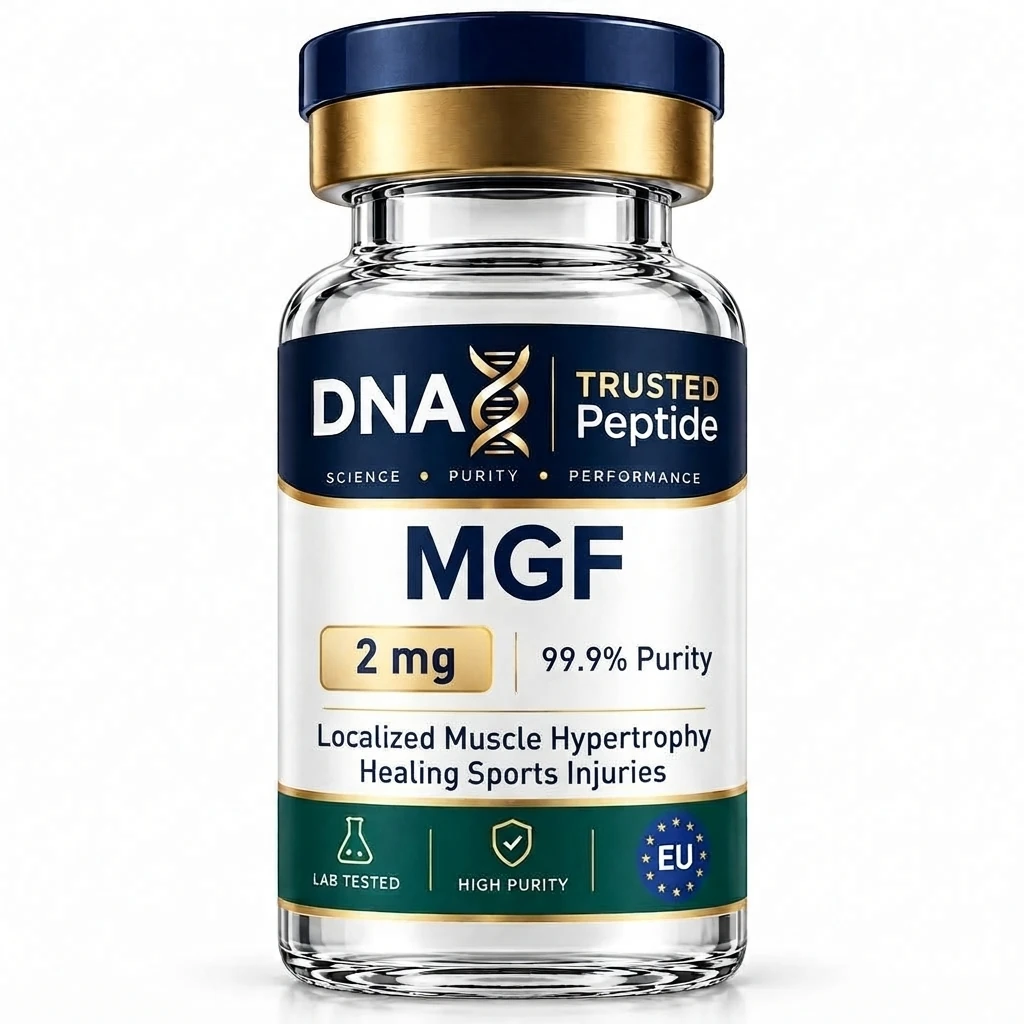

MGF / PEG-MGF
Mechano Growth Factor (MGF) and its PEGylated form PEG-MGF activate muscle satellite cells after exercise or injury to stimulate local repair and muscle hypertrophy.
PEGylated Mechano Growth Factor (PEG-MGF / IGF-1Ec splice variant) is a recombinant, molecularly modified peptide derived from the E domain of human IGF-1, encoded through alternative splicing of IGF-1 messenger RNA after mechanical stress or acute muscle damage. The core active sequence of MGF is a 24-amino-acid C-terminal peptide, which has been covalently bound to polyethylene glycol (PEGylation) to overcome its pharmacological weakness of rapid enzymatic breakdown (native MGF lasts only a few minutes). This raises its plasma half-life to several days without losing its ability to bind target tissues. PEG-MGF works through a distinct biological mechanism that is relatively independent of the classic IGF-1R receptors, directly targeting dormant muscle satellite cells in skeletal fibres, heart muscle and nerve tissue. The peptide stimulates ERK1/2 and MAPK signalling to end the dormancy of muscle stem cells, driving them into active proliferation and enlarging the pool of building cells available for repair, while inhibiting programmed cell death (apoptosis) and protecting damaged cells from oxidative stress after severe mechanical injury.
The molecular stimulator that activates and multiplies muscle stem cells, speeds deep tissue repair and protects fibres from damage
If you are looking for the most specialised biological tool to wake dormant muscle cells, expand the bank of stem cells needed to repair tears and damaged tissue, and protect muscle and heart fibres from damage after intense mechanical stress, PEG-MGF is the enhanced mechanical hormone that translates physical stress into immediate, ongoing cellular renewal.
Classification: Alternative-splice growth-factor peptides, activators of muscle satellite-cell proliferation, long-lasting tissue repair (Splice Variants / Satellite Cell Proliferators / Long-Acting Regenerative Peptides).
Structurally, it is a peptide derived from the E-domain sequence of IGF-1 coupled to a polyethylene glycol bond. This stabilising structure shields it from peptide-degrading enzymes and allows it to remain in the bloodstream and musculoskeletal tissue long enough to stimulate stem cells around the clock without the need for repeated daily injections.
Picture your muscle fibres after hard exertion as a workshop that has been partly demolished. Classic growth factor works like a builder trying to patch the cracks with whatever materials are to hand, while PEG-MGF arrives as a recruiter who calls in hundreds of new workers (satellite cells), trains them and multiplies their numbers so they can rebuild the walls with the greatest possible density and strength.
How it works
When mechanical tears or tissue damage occur in muscle, the body naturally releases a very fast, short-lived pulse of MGF that is not enough to complete complex repair. PEG-MGF steps in to provide a stable, prolonged concentration of this vital signal. The peptide binds specialised receptors on the satellite cells next to the fibres, triggering phosphorylation pathways through MAPK/ERK that prompt these stem cells to leave their resting state, divide rapidly and multiply within the damaged tissue. These new cells later fuse with existing muscle fibres to repair tears and increase the fibres' nuclear content, raising the ceiling of protein synthesis and the muscle's capacity to grow and bear future loads. At the same time, the compound gives strong tissue protection to the heart muscle and peripheral nerves by reducing cell death and trapping free radicals after ischaemia and acute injury, creating a comprehensive repair environment that goes beyond increasing size to re-engineering tissue from its roots.
In clinical and research settings, PEG-MGF is studied in regenerative-medicine models for treating skeletal-muscle disorders and atrophy, protecting the heart muscle after acute myocardial infarction, and speeding the healing of tendon, ligament and nerve injuries, thanks to its superior ability to stimulate cell division and renew musculoskeletal structure.
Repairing strained muscle tissue does not depend only on filling gaps with fluid or temporary protein — it rests on multiplying the number of original building cells using the mechanical code the body designed to renew itself.
The enhanced stimulator for waking muscle stem cells, multiplying tissue building and protecting fibres. PEG-MGF is the long-acting form of the mechanical growth factor derived from the body's natural renewal signals. It belongs to the class of peptides that activate satellite cells, support advanced muscle repair and protect tissue from damage after severe stress. Its polyethylene-glycol-modified structure protects the peptide chain from rapid breakdown, giving it a long half-life in the bloodstream that allows continuous access to tired muscle fibres. Its exceptional mechanism prompts dormant muscle stem cells to divide, proliferate and multiply, fusing into damaged fibres to rebuild the muscle matrix and increase its lean density, while protecting heart and nerve cells from oxidative stress after injury. Pioneers of sports and regenerative medicine study it as the most powerful molecular compound for making good tissue damage and building a solid cellular foundation for muscle growth and recovery with the highest standards of biological stability — because real strength and resilience begin by recruiting new cells that rewrite your body's capacity to recover and develop from within.