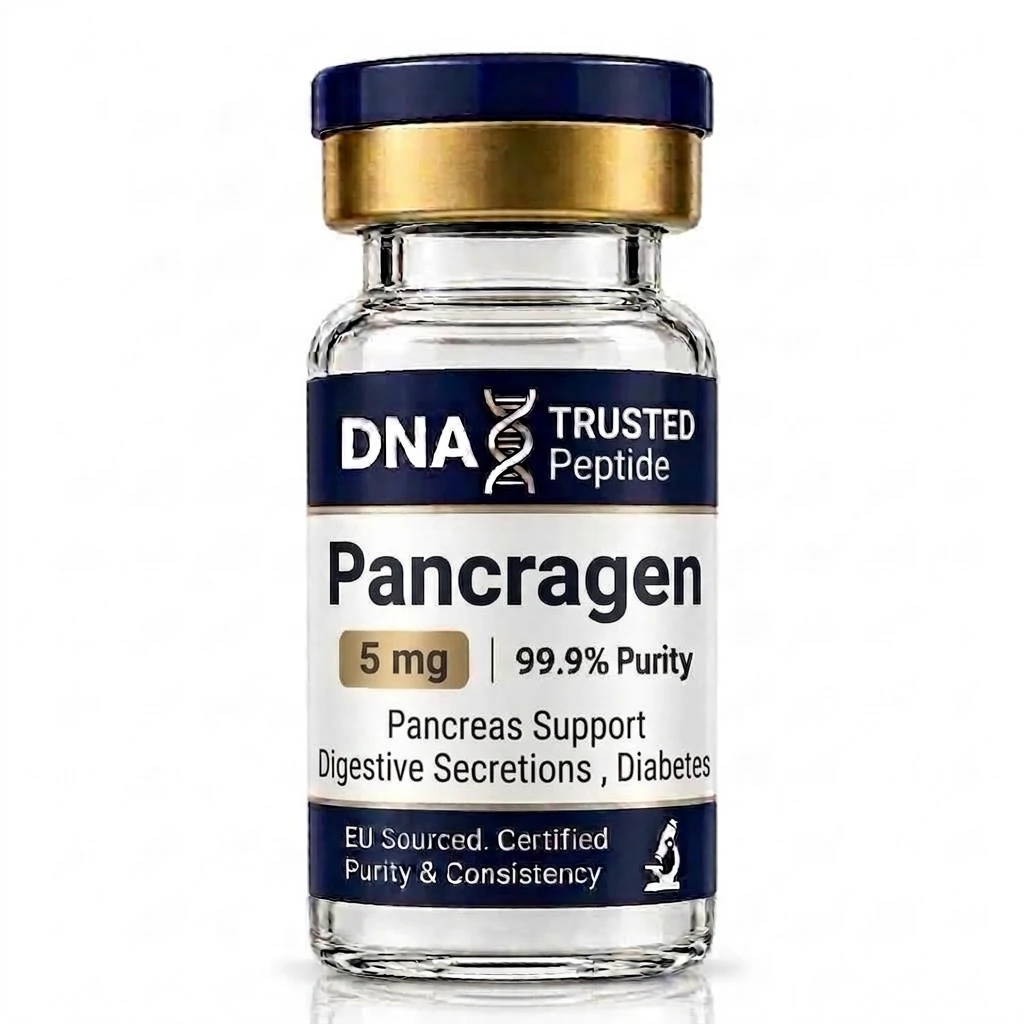

Pancragen
A pancreatic bioregulator that supports islet-cell metabolism, the secretion of digestive enzymes and stable glucose regulation.
Pancragen is an ultra-short synthetic bioregulator tetrapeptide of four amino acids with the precise sequence lysine–glutamic acid–aspartic acid–tryptophan (Lys-Glu-Asp-Trp / KEDW). It was designed and molecularly modelled to mimic the innate regulatory compounds specific to pancreatic tissue, developed mainly within Professor Vladimir Khavinson's research into biomedicine and tissue degeneration. Pancragen acts as a direct epigenetic bioregulator: it passes rapidly through the nuclear membrane and binds with high specificity to the major and minor grooves of DNA and to chromatin histones in the pancreas's islet cells and acinar cells. This molecular binding removes epigenetic suppression and resets gene expression for producing vital functional proteins, particularly the genes that regulate insulin synthesis and secretion and the key transcription factors for beta-cell development and renewal (such as Pdx1 and MafA). This mechanism stimulates the differentiation and renewal of damaged pancreatic beta cells, inhibits programmed cell death caused by sugar and fat toxicity (glucolipotoxicity), and restores balance between the endocrine function (blood-sugar control and insulin sensitivity) and the exocrine function (balanced digestive-enzyme secretion and resistance to chronic pancreatic inflammation and tissue fibrosis).
The genetic bioregulator for restoring pancreatic beta cells, stimulating natural insulin production and countering blood-sugar disorders
If you are looking to target the roots of pancreatic dysfunction at the genetic and cellular level, support the renewal of the insulin-secreting beta cells, and protect pancreatic tissue from fibrosis and the oxidative stress linked to insulin resistance and high blood sugar, Pancragen is the most specific and specialised regulatory peptide for reprogramming and restoring vital pancreatic function.
Classification: Khavinson gene-regulating peptides, peptides for pancreatic repair and renewal, regulators of blood sugar and pancreatic metabolism (Khavinson Bioregulators / Pancreatic Regenerative Peptides / Beta-Cell Cytoprotective Agents).
Structurally, it is a tiny, low-molecular-weight tetrapeptide of four amino acids. This extremely small structure gives it exceptional cellular and nuclear penetration without the need for complex membrane receptors, making it biologically safe and free of immune reactions or strain on the organs.
Picture a pancreas strained by diabetes and poor nutrition as an old factory whose production lines have worn and whose precision machines for dispensing fuel (insulin) have accumulated faults. Pancragen acts as a specialised genetic engineer carrying the original blueprint, who goes straight into the control rooms to restart machine maintenance and build new, efficient production lines.
How it works
Pancragen enters the nuclei of damaged pancreatic cells directly and binds precisely to the gene regions coding for renewal factors and insulin synthesis. This interaction sends biological signals that push exhausted beta cells to regain their ability to make, store and release insulin in response to rising glucose, reducing random swings in HbA1c readings and insulin resistance. At the same time, the tetrapeptide acts as a protective shield that inhibits cell-death pathways caused by oxidative stress and local inflammation, stimulating the growth of new pancreatic cells to replace fibrotic tissue. On the digestive side, Pancragen helps balance digestive-enzyme secretion from the acinar cells, preventing acute and chronic pancreatitis and improving absorption and overall metabolism, without causing sharp drops in blood sugar or random hormonal imbalances.
In clinical and research settings, Pancragen is studied as one of the leading bioregulators for type 2 diabetes and its complications, preventing age-related decline in pancreatic function, and restoring pancreatic tissue after chronic inflammation and surgery, providing deep, lasting regenerative support.
Restoring metabolic balance and controlling blood-sugar levels does not require forcing exhausted cells to work beyond their capacity — it rests on giving the pancreas the pure genetic code that rebuilds its cells and reactivates its innate functions from within.
The advanced bioregulator for restoring pancreatic cells, activating insulin secretion and countering diabetes genetically. Pancragen is a highly specialised molecular innovation inspired by research on Khavinson bioregulators for rebuilding pancreatic tissue and restoring its youth. It belongs to the class of gene-regulating peptides for protecting beta cells, controlling glucose levels and supporting digestive and metabolic health. Its ultra-small tetrapeptide structure passes immediately into cell nuclei to bind the genetic code directly, acting as a biological stimulus that activates pancreatic renewal genes and restores their natural ability to make insulin with great precision. Its unique mechanism protects cells from damage caused by high blood sugar and oxidative stress, resists tissue fibrosis and improves digestive-enzyme secretion — helping to break insulin resistance and stabilise daily energy with the highest natural biocompatibility. Pioneers of regenerative medicine study it as the most powerful compound for protecting the pancreas from decline and ageing and safely resetting metabolism — because lasting metabolic healing begins by restoring your vital energy sources with nature's original codes that return your organs to their innate efficiency.