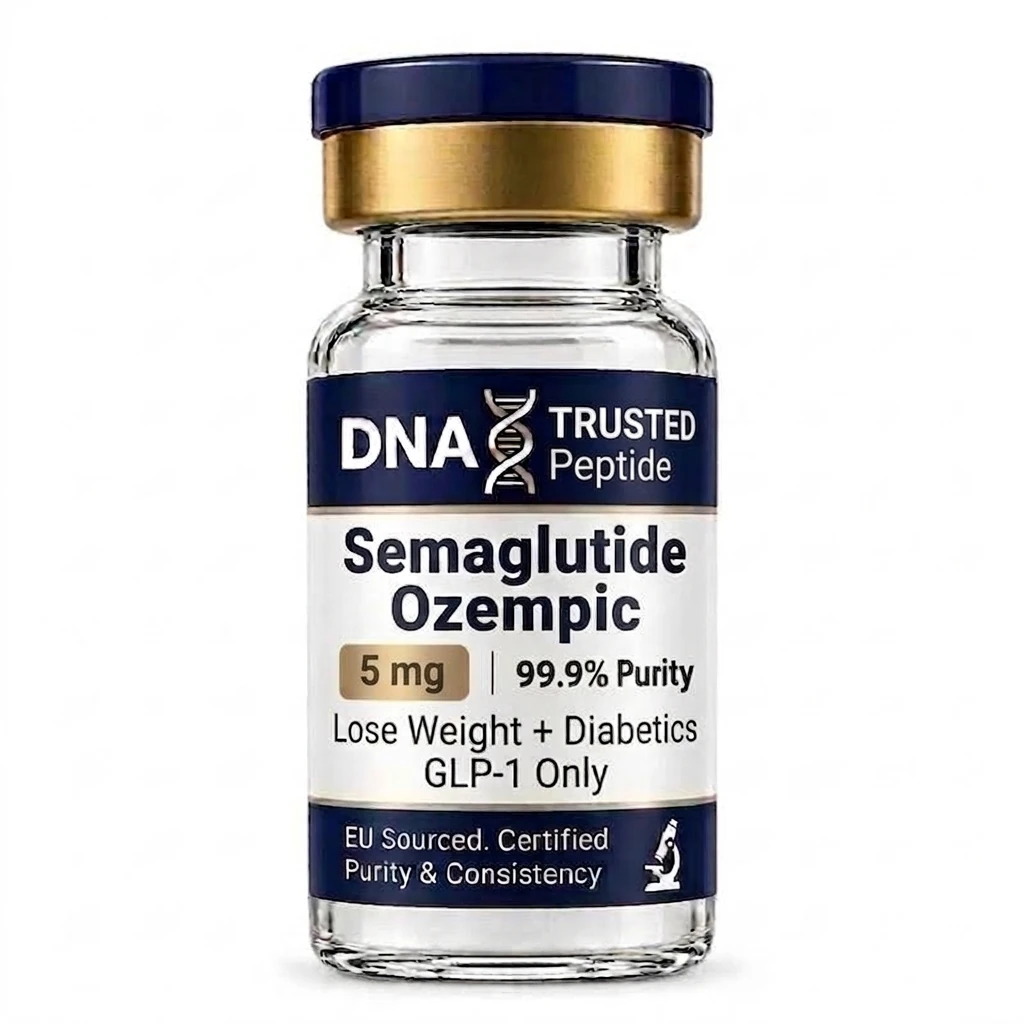

Semaglutide - Ozempic
A GLP-1 receptor agonist analogue, widely used in metabolic and appetite-regulation research.
Semaglutide (sold as Ozempic, Wegovy and Rybelsus) is a synthetic analogue of human glucagon-like peptide-1 (human GLP-1 analog) with about 94% structural identity to the natural hormone, molecularly modified to resist breakdown by dipeptidyl peptidase-4 (DPP-4). It consists of 31 amino acids. Its biochemical engineering replaces alanine at position 8 with alpha-aminoisobutyric acid (AIB) to block DPP-4 cleavage, replaces lysine at position 34 with arginine, and attaches a C18 diacid fatty side chain (spacer chain) to the lysine at position 26. This fatty link gives strong, reversible binding to serum albumin, reducing renal clearance and extending its plasma half-life to about 165 hours (a full week), allowing a single weekly dose. Semaglutide is a highly potent selective agonist of the Gs-coupled GLP-1 receptor (GLP-1R): it activates adenylate cyclase and raises cAMP in pancreatic beta cells, stimulating insulin secretion that depends precisely on glucose concentration, while suppressing inappropriate glucagon release from alpha cells during high blood sugar. Alongside this endocrine action, semaglutide binds GLP-1 receptors in the arcuate nucleus (ARC), the hypothalamic control areas and the area postrema of the brainstem — damping hunger and appetite signals and modulating dopamine reward pathways towards high-fat foods — while delaying gastric emptying, lowering systolic blood pressure and systemic vascular inflammation (reducing hs-CRP), and providing comprehensive cardiovascular and renal protection.
The revolutionary once-weekly GLP-1 agonist for precise blood-sugar control, neural appetite suppression and cardiovascular protection
If you are looking to regain full physiological control of blood sugar without sharp crashes, end random hunger and constant sugar cravings by resetting the brain's satiety centres, and support healthy weight loss while protecting the heart and kidneys — all with one steady weekly dose — Semaglutide (Ozempic) is the most successful and best-documented gold standard in modern endocrinology and metabolic medicine.
Classification: Long-acting GLP-1 peptide analogues, weekly incretin-receptor agonists, therapies for type 2 diabetes and obesity, and cardio-renal protection (Long-Acting GLP-1 Receptor Agonists / Incretin Mimetics / Antidiabetic & Cardiometabolic Therapeutics).
Structurally, it is a modified peptide protected by a fatty-acid chain that binds blood proteins. This advanced design fully protects it from rapid enzymatic breakdown and keeps it active in the bloodstream for seven full days, continuously feeding metabolic and satiety receptors with a steady, balanced flow.
Picture your metabolic engine suffering from an irregular fuel supply: sudden hunger drives you to eat large amounts that spike blood sugar, followed by a crash that brings fatigue and fat storage. Semaglutide acts like an ultra-precise electronic cruise control — gently regulating the flow of fuel from the stomach, telling the pancreas to release only as much insulin as needed, and sending the brain a calm signal of fullness that ends constant thoughts about food.
How it works
After a weekly injection, semaglutide binds GLP-1 receptors on pancreatic beta cells, stimulating insulin release only when blood sugar rises after meals — preventing sudden lows and keeping glucose balanced — while suppressing glucagon, which drives excess sugar output from the liver. In the digestive system, the peptide slows gastric emptying, creating a lasting sense of satiety after small meals. In the brain, it reaches the hypothalamic energy-regulation centres, binding satiety receptors and quieting hunger signals and compulsive urges to eat. It also lowers triglycerides and inflammation in artery walls and improves endothelial function, providing a protective shield that measurably reduces the risk of cardiovascular events and decline in kidney function.
In clinical and medical settings worldwide, semaglutide is a leading, FDA-approved medicine for type 2 diabetes, chronic weight management and reducing cardiovascular risk in people with diabetes, and it leads international studies as one of the most powerful metabolic compounds shown to improve the body's overall biomarkers with rigorous scientific documentation.
Restoring metabolic balance and weight control is no longer an exhausting battle of willpower against hunger — it is a therapeutic step built on correcting the natural hormonal language that manages appetite and blood-sugar stability efficiently and safely.
The benchmark weekly agonist for blood-sugar control, appetite management and cardiovascular protection. Semaglutide, known worldwide as Ozempic, is the landmark medical achievement that revolutionised the treatment of metabolic disorders, obesity and diabetes. It belongs to the class of long-acting GLP-1 analogues that stimulate the body's own insulin release, slow gastric emptying and regulate the brain's satiety centres. Its fatty-chain-protected structure binds blood albumin, giving it a long life of a full week from a single steady dose. Its unique mechanism prompts the pancreas to produce insulin only in response to food and suppresses excess liver sugar, while sending continuous fullness signals to the hypothalamus to end random hunger and reduce sugar cravings — achieving balanced weight loss and strong protection of the arteries and heart muscle from oxidative stress. Leading endocrinologists worldwide study and rely on it as one of the strongest documented foundations for resetting body chemistry and restoring metabolic vitality — because sustainable metabolic health starts by directing satiety signals and fuel burning with a pure biological code that protects your life from within.