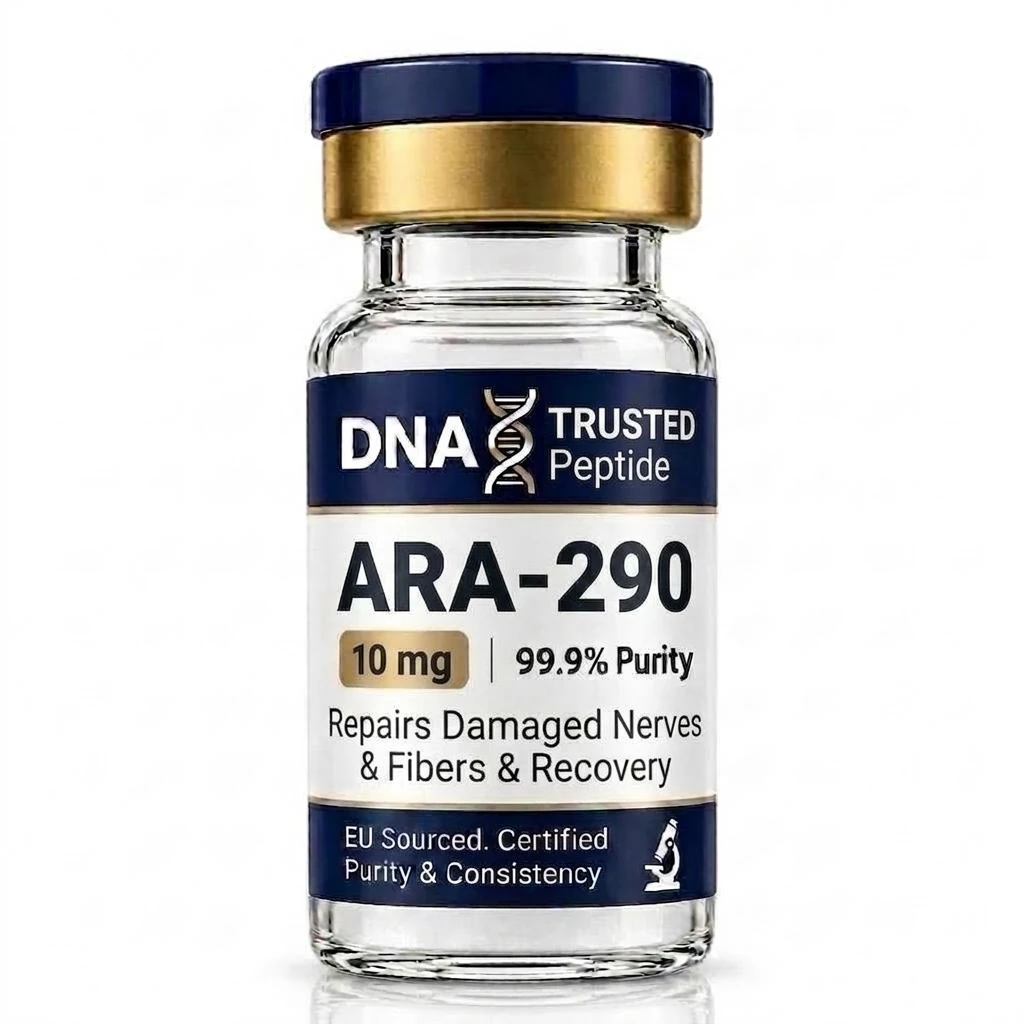

ARA-290
An erythropoietin-derived peptide, studied in neuropathic-pain and anti-inflammatory research.
ARA-290, also known as Cibinetide, is a linear, non-erythropoietic 11-amino-acid peptide derived from the helical structure of the hormone erythropoietin (EPO). It was designed to isolate EPO's anti-inflammatory, tissue-repairing and neuroprotective properties without activating the red-blood-cell-producing erythropoietin receptors (EPOR), avoiding the risks of increased blood viscosity and clotting. ARA-290 binds specifically to the Innate Repair Receptor (IRR) — a heteromeric complex combining the EPO receptor with the common beta receptor (CD131) — inhibiting inflammatory cytokines, preventing programmed cell death, stimulating regeneration of small nerve fibres and easing peripheral nerve pain.
Repairing fine nerves and quieting inflammation without the risk of raising blood-cell counts
If you know erythropoietin (EPO) for its outstanding ability to protect tissues and renew cells but fear its dangerous effect of thickening the blood and causing clots, ARA-290 is the engineered solution that captures all of the neural-healing benefits without touching blood cells.
Classification: Small-nerve-fibre regenerative peptides, neuropathy treatment and cellular anti-inflammatory action (Neuroregenerative / Innate Repair Receptor Agonist).
Structurally, it is a short 11-amino-acid chain that mimics only the building, healing side of EPO, without the sequences that stimulate the bone marrow to produce red blood cells.
Picture damaged nerve fibres in the limbs as a network of fine wires whose insulation is burning from chronic inflammation or diabetes. They need a biological rescue message that puts out the fire and re-weaves the nerves' insulating sheath without affecting blood fluidity.
How it works
ARA-290 binds exclusively to the Innate Repair Receptor (IRR), an emergency receptor activated on damaged cells and nerve fibres when injury or inflammation occurs. This switches off pro-inflammatory pathways such as NF-kB and lowers damage-promoting cytokines, while activating regeneration of fine unmyelinated nerve fibres (small nerve fibres). The result is relief of burning neuropathic pain, restoration of normal sensation in the limbs and faster healing of chronic wounds.
In research settings, it is studied in models of diabetic peripheral neuropathy, sarcoidosis, fibromyalgia and repair of tissue damaged by ischaemia and poor perfusion.
Treating nerve damage is not limited to relieving pain — it begins by stimulating the innate cellular pathways that can regrow fine nerve fibres.
Rebuilding fine nerves and putting out the fires of inflammation. ARA-290 is a biological breakthrough aimed at repairing damaged nerve tissue without affecting blood density. It belongs to the class of neuroprotective peptides that activate innate repair receptors. Scientists derived it from the structure of erythropoietin so that it focuses exclusively on healing signals and on fighting pain and inflammation, binding special repair receptors on the surface of stressed cells. Its mechanism halts the inflammatory impulses behind burning nerve pain while stimulating growth and regeneration of small nerve fibres in the limbs and improving the healing of chronic wounds. Researchers study it as an exceptional hope for diabetic neuropathy and stubborn limb pain without any risk of blood clotting — because true neural healing comes from activating the body's own repair systems in its finest fibres.