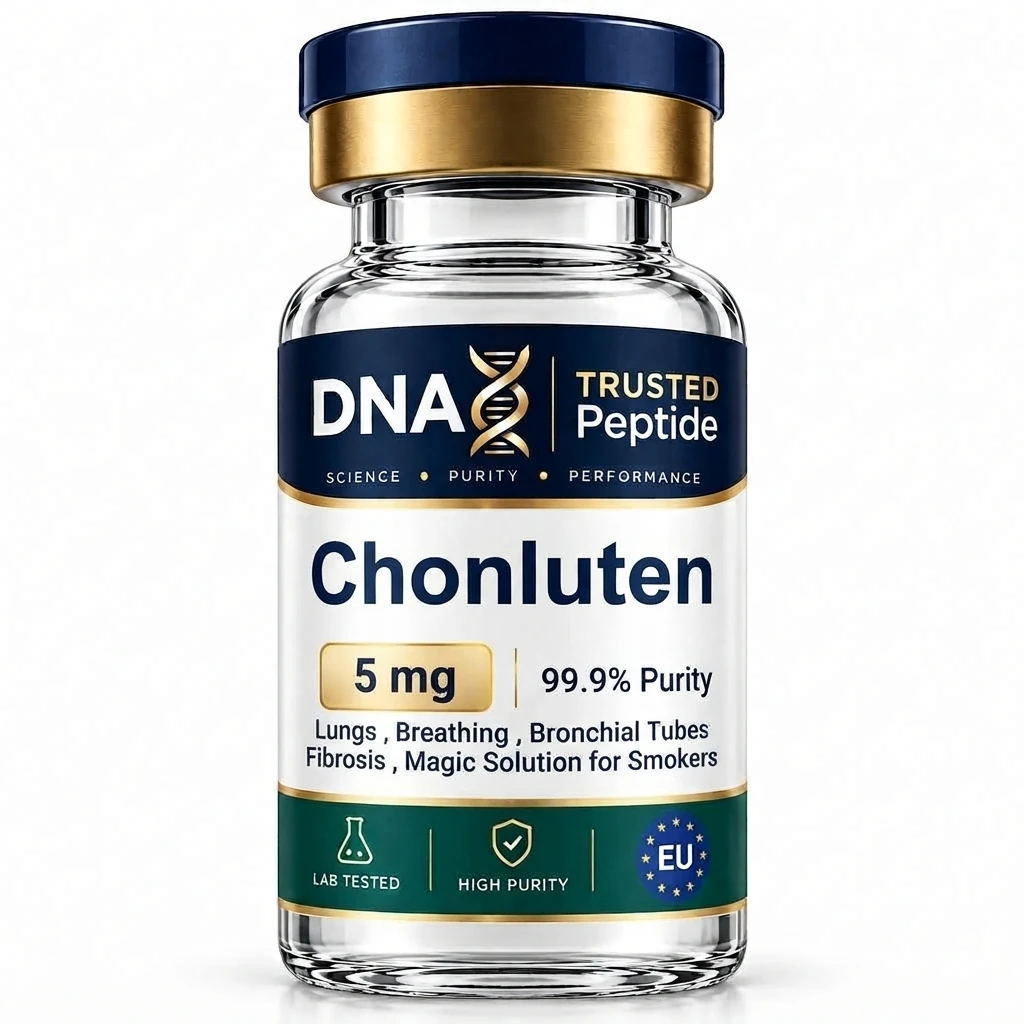

Bronchogen / Chonluten
Bioregulators for the respiratory system: Chonluten calms mucosal inflammation and clears excess mucus, while Bronchogen renews damaged epithelial and lung tissue.
Bronchogen, also known by its experimental name or in bioactive supplement formulas as Chonluten, is a short regulatory bioactive peptide of four amino acids (Ala-Glu-Asp-Leu), originally derived from lung and bronchial tissue extracts through research at the St Petersburg school of regulatory peptides (Khavinson). It was designed to act as a genetic and molecular regulator dedicated to respiratory-system cells: it penetrates the nucleus of the epithelial cells lining the bronchi and lung tissue and binds specific regions of DNA, stimulating the synthesis of structural proteins, activating the movement of respiratory cilia, inhibiting chronic inflammation and oxidative-stress pathways, and restoring the flexibility of alveoli damaged by smoking, pollution or acute respiratory infection.
The specialised genetic regulator for protecting the lungs and restoring the airways
If you are looking to rehabilitate your lungs and improve gas-exchange efficiency after years of smoking, pollution or chronic respiratory inflammation, Bronchogen / Chonluten is the biological key to resetting respiratory cells at the genetic level.
Classification: Cellular bioregulator peptides, lung health, respiratory-system protection (Bioregulator Peptides / Respiratory & Bronchial Regeneration).
Structurally, it is a very small tetrapeptide made of alanine, glutamic acid, aspartic acid and leucine, with a tiny molecular weight that lets it pass quickly through cell membranes directly into the nucleus without needing complex carriers.
Picture the bronchi and alveoli as microscopic forests covered with fine cilia that wither and stiffen from constant inhalation of toxins: the cilia lose their movement, thick secretions build up, and the ability to take up oxygen declines.
How it works
Bronchogen enters the epithelial cells lining the airways and binds the gene sequences responsible for restoring lung tissue. It stimulates the renewal of ciliated respiratory cells so they clear the airway efficiently, and curbs the production of inflammatory cytokines that cause bronchial narrowing and phlegm build-up. In parallel, it protects lung tissue from fibrosis and stiffening by balancing the production of elastin fibres, raising vital lung capacity, improving blood oxygenation and easing episodes of breathlessness and chronic cough.
In research, it is studied in models of chronic obstructive pulmonary disease (COPD), chronic bronchitis and asthma, and in rehabilitating lung function after severe viral infections or smoke poisoning.
Breathing freely does not only need temporary bronchodilators — it needs genetic orders that revive respiratory tissue from deep within the cell.
Rehabilitating the lungs and restoring the airways from their genetic roots. Bronchogen, also known as Chonluten, is the pioneering achievement in targeted bioregulation research for reviving the respiratory system and protecting the lungs. It belongs to the class of regulatory bioactive peptides for restoring bronchial tissue and improving breathing efficiency. Its four ultra-small amino acids penetrate lung-cell nuclei directly to stimulate the genes responsible for building and renewing damaged tissue, activating the respiratory cilia that expel impurities and mucus while dampening the chronic inflammation that narrows the airways. This improves alveolar flexibility, raises oxygen-exchange efficiency and protects chest cells from fibrosis caused by smoking or severe air pollution. Scientists study it as a key cornerstone for supporting people with chest allergies and COPD and restoring the body's energy through deep, clean breathing — because clean lungs begin with biological signals that rebuild their exhausted walls with great precision.